Classical Networks Mimic Quantum Behavior in Living Systems
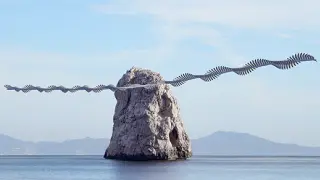
Researchers previously thought quantum effects might explain remarkable biological phenomena like nearly perfect light harvesting in photosynthesis, but evidence now suggests organisms instead simulate quantum behavior through classical biological networks. Chemist Gregory Scholes and colleagues have demonstrated that complex interconnected systems of non-quantum components can produce effects that resemble quantum properties without invoking actual quantum mechanics. This reframing suggests that biology's mathematical structures share similarities with quantum mathematics while remaining fundamentally classical in operation.
For years, researchers believed quantum mechanics might explain biological mysteries, particularly photosynthesis's remarkable efficiency in converting light into chemical energy. This enthusiasm stemmed from 2007 research suggesting organisms maintained fragile quantum states—counterintuitive given biology's warm, wet environment. However, Princeton chemist Gregory Scholes, initially a believer, reversed course after further investigation.
Scholes now argues that biological systems don't actually exploit quantum effects but rather simulate them through intricate classical networks. When many interconnected components oscillate together, their combined behavior follows mathematical patterns identical to quantum predictions, creating "quantumlike" phenomena without true quantum properties. This reframing suggests evolution refined methods to achieve quantum-level functionality through purely classical mechanisms.
This finding could reshape how scientists approach biological puzzles and quantum research priorities. If organisms achieve quantum-comparable performance through classical systems, researchers may redirect resources toward understanding complex network dynamics rather than hunting for quantum effects in living cells. This could impact pharmaceutical development, agricultural optimization, and quantum computing research by clarifying which biological mysteries genuinely require quantum explanations versus classical complexity. Academic funding priorities may shift accordingly based on this theoretical reorientation.