Framework for Deploying Autonomous Construction Robots Addresses Hidden Failure Modes
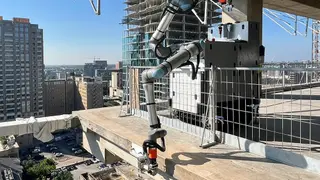
Raise Robotics will present a leadership framework for closing capability gaps in field-deployed autonomous systems, addressing the common pattern where robots function in labs but underperform in real-world conditions. The framework tackles two critical hidden failure modes—sampling bias across different job sites and margin stacking across sequential components—along with decision rules for determining whether to fix hardware or develop operator protocols. The company's track record includes 10 construction projects with over 4,500 robot-hours and zero safety incidents.
Raise Robotics has compiled operational data from a decade of deployment work on building facades, accumulating over 4,500 hours of autonomous robot operation without safety incidents. This real-world track record forms the foundation for the company's newly peer-reviewed framework, which addresses why systems that perform reliably in controlled laboratory settings frequently encounter performance degradation when deployed on active construction sites. The framework identifies two primary sources of these field failures: inconsistencies that emerge when systems encounter varying conditions across different job sites, and compounding tolerance issues that arise as robots move through sequential operational stages, each with its own acceptable margins.
The decision framework Tjandra has developed provides robotics teams with structured criteria for determining whether field performance gaps should be addressed through hardware modifications or through operator training and procedural protocols. This distinction matters because engineering resources are finite; teams must prioritize which capability shortfalls represent fundamental technical limitations versus those that can be closed through improved human-system coordination and discipline.
The framework could influence how construction robotics companies allocate development resources and approach market scaling, potentially accelerating the adoption of autonomous systems in building trades. Workers in construction sectors may see shifts in job requirements and training needs as robotics integration becomes more systematic. Equipment manufacturers and construction firms could benefit from clearer decision criteria for when to invest in product refinement versus operational standardization, though widespread adoption remains dependent on economic viability and demonstrated safety performance across diverse project conditions.