New Framework Enables MCP Agents to Verify Information Origin and Credibility
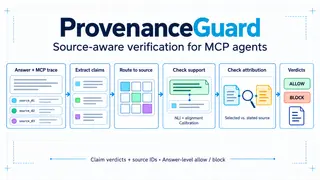
A novel approach to agent verification has been developed that moves beyond simple fact-checking to examine the sources and reliability of information used by MCP agents. This source-aware system helps ensure that AI agents not only provide accurate information but also understand and validate where that information originates. The methodology strengthens the trustworthiness and transparency of agent-based systems in open-source environments.
A recently introduced framework addresses a gap in how AI agents operating through the Model Context Protocol handle information reliability. Rather than simply confirming whether statements are true or false, this approach examines the underlying sources that agents reference and assess their credibility. This represents a shift toward greater transparency in how AI systems justify their outputs.
The development reflects growing attention to the broader challenge of trustworthiness in agent-based AI systems, particularly as these tools are adopted in open-source projects and beyond. By integrating source verification into agent workflows, the framework aims to build systems that can not only answer questions accurately but also demonstrate the reasoning and evidence behind their conclusions.
This methodology could affect how organizations deploy AI agents in contexts where source attribution matters—research, compliance, journalism, and knowledge work. If widely adopted, it may reduce risks associated with agents providing accurate-sounding but poorly sourced information. The impact could extend to end users who interact with such systems, potentially offering greater visibility into how AI arrives at conclusions. However, effectiveness depends on how well the framework scales and whether developers choose to implement it across diverse use cases.