Podcast: Reading Burnt Scrolls and an Edible Battery
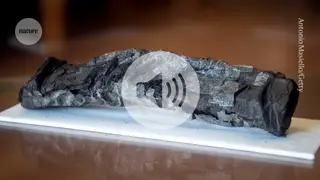
In this Nature podcast episode, the hosts examine a method that may let researchers read charred Herculaneum scrolls without opening them. The episode also covers a biodegradable, edible battery designed for medical devices. It is part of the Nature Briefing podcast series.
This Nature Briefing episode, dated 25 September 2026 and hosted by Benjamin Thompson and Shamini Bundell, covers two advances. Its first segment, around 00:23, examines lead detection as a route to deciphering damaged Roman scrolls. The second, near 06:42, looks at a paper-inspired battery that is both biodegradable and edible.
Related Nature reporting cited in the episode includes work on reading rolled-up Herculaneum texts, using AI to recover ancient writing, and edible batteries for medical implants. The episode sits within Nature's coverage of chemistry, archaeology, and energy.
This story may affect archaeologists, conservators, historians, and medical-device researchers. If the scroll-reading method works, it could let scholars study fragile texts without physically opening them, potentially expanding access to damaged cultural heritage. Edible, biodegradable batteries could influence how implantable devices are powered and later disposed of, possibly reducing retrieval procedures or waste. These are early possibilities, and practical limits, safety, and validation would shape any real-world impact.