How a Validation Engineer Helps NVIDIA Hardware Scale Reliably
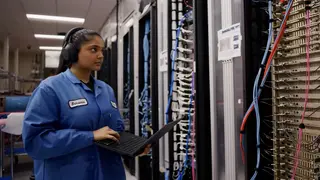
Sakeena Fiza works as a validation engineer at NVIDIA, testing data center systems from initial lab bring-up through production. Her team aims to find potential failures before customers encounter them, including early system-level bring-up of the Rubin GPU. The profile describes validation as becoming the first customer for new hardware and ensuring it can operate reliably at scale.
Sakeena Fiza studied computer science and engineering at UC Irvine. Raised in Dubai, she first met programming through Logo, later building Mars rover projects at a robotics camp and working on drones in college. At NVIDIA, her validation role touches embedded code, circuits, applications, physical structures, heat management, factory processes, and user needs.
Her team examines data center systems from initial energizing through rack and cluster stages, manufacturing, and customer sites. She remembers the Rubin GPU being detected at system level for the first time, prompting team celebration. Validation seeks to uncover faults before customers do, sometimes tracing issues to signaling, thermals, power, screws, or dust.
Reliable validation of AI data-center hardware may affect cloud providers, enterprises, researchers, and everyday users who depend on AI services. By catching faults before deployment, such work could reduce costly outages and build confidence in large-scale computing. It may also shape how quickly advanced chips like Rubin reach production, influencing access to AI capabilities across industries.