Infleqtion and Nvidia Shrink Qubit Overhead for Quantum Error Correction
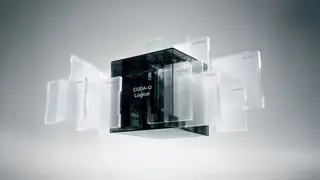
Infleqtion and Nvidia have combined their quantum software and orchestration tools to lower the number of physical qubits required to form a logical qubit, a critical step for error correction in quantum systems. The integration leverages Infleqtion's open-source qLDPC library with Nvidia's CUDA-Q Logical layer. This development aims to reduce the overhead that has hindered quantum computing's commercial scalability.
The integration pairs Infleqtion's open-source qLDPC library with Nvidia's CUDA-Q Logical orchestration layer, unveiled at IEEE Quantum Week in Toronto. Using an early-access version of the Nvidia software, Infleqtion constructed a hypergraph-product simplex code block with 49 X-checks and 49 Z-checks, each of weight six, while canonical logical representatives achieved weight four. The company's Sqale systems employ neutral atoms to form qubits.
This result—roughly 5.4 physical qubits per logical qubit—compares favorably with broader industry efforts. Quantinuum recently detailed technology producing 48 error-corrected logical qubits from 98 physical qubits, while Qarakal Quantum and D-Wave have announced similar overhead-reduction ambitions. High-rate qLDPC codes encode multiple logical qubits per block while keeping stabilizer checks sparse, though architectural cooperation from syndrome ancilla qubits and other subsystems remains essential.
Reducing physical-to-logical qubit overhead could accelerate quantum computing's transition from laboratory research to commercial deployment. Industries relying on complex simulations—pharmaceuticals, materials science, logistics, cryptography—may eventually access error-corrected systems at lower cost, as cooling and manufacturing expenses scale with physical qubit count. However, near-term impact remains limited; validated codes still require supporting architecture improvements, and broad societal effects will likely emerge gradually over years rather than through immediate disruption.