Epson's New AX6 Cobot Targets Easy Integration with Force-Limiting Safety
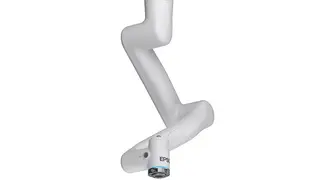
Epson Robots has launched the AX6, a six-axis collaborative robot with a 900 mm reach and 6 kg payload, designed for safe human-adjacent operation via power- and force-limiting features. The arm runs on an Ethernet-enabled controller with browser-based no-code software, allowing standard tablets to serve as teach pendants. Epson positions the AX6 as part of a full portfolio of safety-oriented robotic tools for industries like electronics and medical devices.
The AX6 extends Epson’s existing six-axis lineup while complementing its dominant SCARA market position. Its 900 mm reach and 6 kg payload target precise assembly and material-handling tasks in sectors like electronics and medical devices. The arm’s carbon-fiber construction and ISO Class 5 cleanroom rating make it viable for controlled environments, including life-science monitoring applications where sensors must be moved through free space.
Epson’s design emphasizes accessibility through browser-based control, allowing standard industrial tablets to function as teach pendants. The system supports both no-code programming for novice operators and a customizable Python environment for complex workcells. Additional features include end-of-arm Ethernet and pneumatic ports, a multicolor status LED ring, and a 3D simulator for pre-deployment testing. The cobot also accommodates multiple power sources, including 48 V DC, which could support mobile manipulation setups.
This launch could accelerate automation adoption among smaller manufacturers that previously found robotics too complex or costly. By enabling tablet-based programming and safe human-adjacent operation, the AX6 may lower skill barriers, potentially shifting workforce roles toward supervision rather than manual handling. Industries like electronics and life sciences could see faster production cycles, though companies must still conduct proper risk assessments. The broader effect may be a gradual normalization of collaborative robots in tight, human-centric workspaces, influencing how smaller firms approach automation investments.