Arduino's VENTUNO Q board targets simpler robot builds with dual-chip edge AI design
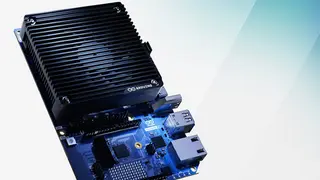
Arduino, now a Qualcomm subsidiary, has opened pre-orders for its VENTUNO Q edge AI platform, which combines a Qualcomm Dragonwing IQ8 processor with an STM32H5 real-time microcontroller. The board is designed to simplify robotics development by offering pre-loaded Ubuntu and a familiar Arduino ecosystem, aiming to reduce the complexity of building autonomous mobile robots. Company officials describe it as Arduino's first intentional robotics product, building on over two decades of community use in robotics projects.
The VENTUNO Q pairs a Qualcomm Dragonwing IQ-8275 processor with an STM32H5 microcontroller, a configuration designed to handle both high-level AI reasoning and low-level, time-sensitive motor control. Its 40 TOPS of AI performance and 16 GB of memory target autonomous mobile robots that must process sensor data locally rather than relying on cloud connectivity. The board ships with Ubuntu and supports the Arduino App Lab, VS Code, and native Linux tools, while the MCU side runs Arduino Core on Zephyr RTOS for deterministic control of motors and CAN-FD. This dual-brain approach reflects a broader industry trend toward edge computing, where robots require immediate, offline responses for sensing, reasoning, and actuation. Arduino's acquisition by Qualcomm last year provided the resources to develop this product, which the company describes as its first intentional robotics platform, building on two decades of community-driven robot projects.
The VENTUNO Q could meaningfully lower the barrier to entry for robotics development, potentially enabling smaller companies, researchers, and hobbyists to prototype autonomous systems that previously required specialized expertise. By integrating AI processing with real-time control on a familiar platform, it may accelerate experimentation in areas like warehouse automation and service robots. However, its impact depends on whether the broader ecosystem of accessories and software tools delivers on the promise of simplicity, and whether the cost remains accessible to the wider community that Arduino has traditionally served.