DRAM designer Piecemakers targets edge AI with hybrid-bonded memory instead of HBM
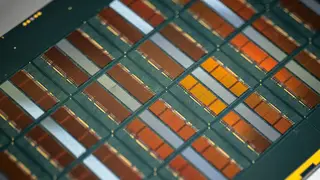
PieceMakers, a Nanya-backed DRAM designer, began trading on Taiwan's Emerging Stock Board on September 16, betting that AI inference memory will diverge from HBM. The company proposes stacking DRAM directly on the processor using hybrid bonding, positioning between SRAM-only solutions and HBM. Design fees currently drive profits, with volume customer revenue expected no earlier than 2027.
Piecemakers' path to its current position began in 2006 in Hsinchu, where it historically designed standard DRAM and known-good-die components sold through distributors across Asia, Europe, and the Middle East. Its pivot toward custom AI memory work accelerated sharply, with that segment growing from roughly 4% of revenue in 2024 to nearly 40% by mid-2026. The company's core offerings include a 2D memory die rated at 144 GB/s, first taped out for Intel's HPC line in 2016, and a 3D-stacked version exceeding 1 TB/s.
The company's first trading day saw shares close at NT$915, up 23.6% from the reference price, after touching a high of NT$1,205. Nanya Technology holds a 33.96% stake and sold 715,000 shares to seed the float. Piecemakers' business model is transitioning from direct product sales toward non-recurring engineering fees, with plans to add IP licensing, royalties, and turnkey production starting in 2027. Its customer base reportedly includes cloud AI inference accelerator developers and unnamed North American firms, though no volume production revenue is expected before next year.
This bet on hybrid-bonded DRAM for edge inference could reshape how AI hardware is designed for devices that must balance speed, power, and cost. If successful, it may offer a middle path between expensive HBM and limited SRAM, potentially lowering barriers for smaller AI developers and broadening deployment of on-device inference. Consumers could eventually see faster, more efficient edge devices, while the memory industry might see new competitive dynamics beyond the dominant HBM suppliers. However, with volume revenue not expected until 2027 at the earliest, the practical impact remains uncertain and dependent on execution.