Retiring humanoid robots poses complex recycling and data-security challenges
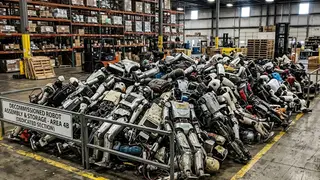
Humanoid robots contain thousands of components across actuation, structural, sensory, and semiconductor systems, making end-of-life processing highly technical. Key risks include kinetic data breaches from stored memory, thermal runaway from lithium batteries, and the need for specialized dismantling. The industry has yet to address the multi-billion-dollar question of safe and secure decommissioning.
The article details how humanoid robots integrate 200 to 500 major sub-components across four interconnected systems, from sealed drive modules combining motors and harmonic drives to sensory networks with lidar, IMUs, and cameras. The semiconductor core alone can contain up to 80 memory devices holding proprietary navigation maps, biometric logs, and behavioral data.
The magnet paradox is particularly notable—each unit carries 3.5 to 4 kilograms of rare-earth neodymium magnets, exceeding what is found in an entire EV skateboard chassis. Bulk crushing cross-contaminates these valuable metals with aluminum, titanium, and carbon fiber, rendering them useless. Extraction requires skilled technicians to surgically remove magnets while facing pinch injuries, shrapnel, and rapid oxidation risks.
The decommissioning challenge could significantly affect manufacturers, recyclers, and enterprises deploying humanoid fleets. Companies may face unexpected liability costs from data breaches, battery hazards, and material fatigue failures. The specialized dismantling requirement could create a new recycling industry niche, while rare-earth recovery potential may influence supply chain economics. Consumers and workers interacting with these robots could be affected by safety protocols and privacy protections that remain undefined as the industry scales.