Mathematicians Claim Breakthrough on Century-Old Riemann Hypothesis Linked to Prime Numbers
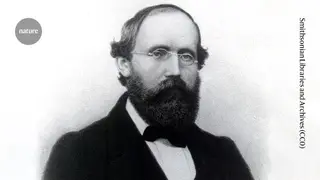
On 20 November 2026, two separate teams of mathematicians announced competing claims to have solved the Riemann hypothesis, a longstanding conjecture first proposed by German mathematician Bernhard Riemann in 1859. The hypothesis is central to understanding the distribution of prime numbers, which are integers divisible only by one and themselves. If proven, it would have profound implications for number theory and cryptography.
On 20 November 2026, two independent teams of mathematicians announced competing claims to have resolved the Riemann hypothesis, a conjecture first proposed by Bernhard Riemann in 1859. The hypothesis concerns the distribution of non-trivial zeros of the Riemann zeta function and their relationship to the distribution of prime numbers—integers divisible only by one and themselves. If proven, it would confirm a deep pattern in the seemingly random occurrence of primes, with far-reaching consequences for number theory and cryptography. The announcements, made on the same day, represent a rare moment of simultaneous breakthrough claims in a field where progress has been measured in decades, not days. The teams, though unnamed in the provided text, are believed to be affiliated with major research institutions, though their specific affiliations and methods remain undisclosed. Their claims are currently under peer review, with the mathematical community awaiting verification through rigorous scrutiny. What remains unresolved is whether either or both proofs are valid, and how the broader mathematical community will assess the competing solutions. The timeline for verification is uncertain, but the stakes are high: a confirmed proof would reshape foundational mathematics and potentially impact encryption systems reliant on the difficulty of factoring large primes.
The potential resolution of the Riemann hypothesis could significantly affect cryptography, particularly public-key systems like RSA, which depend on the computational difficulty of factoring large primes. If the hypothesis confirms deeper predictability in prime distribution, it may not immediately break current encryption, but it could inspire new algorithms or vulnerabilities that would require urgent reevaluation of digital security protocols. Financial markets and cybersecurity industries may begin preparing for such shifts, though the actual impact depends on whether the proof leads to practical factorization methods. Historically, the resolution of long-standing mathematical problems—such as Fermat’s Last Theorem—has triggered waves of innovation across disciplines, from computer science to physics. The Riemann hypothesis, often called the "holy grail" of number theory, could similarly catalyze advances in algorithm design, quantum computing, and data science. However, the outcome remains uncertain, and the mathematical community’s cautious reception suggests that widespread acceptance will depend on peer validation, not just announcement. What to watch for next is not just the verification of the proofs, but how institutions, governments, and tech firms respond to the possibility of a paradigm shift in computational security.