Arteries resist abnormal growth from PIK3CA mutations due to cellular maturity and identity
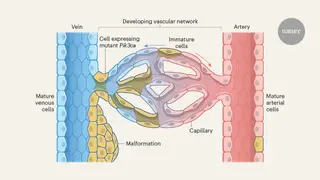
Mutations in the PIK3CA gene cause vascular malformations in veins, capillaries, and lymphatic vessels but rarely in arteries. New research reveals that arterial cells resist overgrowth due to their mature identity and intrinsic signaling stability. The study by Sabata et al. demonstrates that arterial endothelial cells maintain structural integrity even under oncogenic stress, highlighting the importance of cell type-specific responses in vascular disease.
In a study published in Nature on 25 November 2026, Sabata et al. investigated why mutations in the PIK3CA gene—commonly linked to cancer and vascular malformations—rarely affect arteries despite their presence in veins, capillaries, and lymphatic vessels. The research, conducted by scientists at the Max Delbrück Center for Molecular Medicine in Berlin and the German Center for Cardiovascular Research, reveals that arterial endothelial cells resist abnormal growth due to their mature cellular identity and intrinsic signaling stability. Unlike other vascular cells, arterial cells maintain structural integrity even under oncogenic stress induced by PIK3CA mutations. This resistance is attributed to the cells’ established molecular identity, which may limit the disruptive effects of such mutations. The findings build on prior work, including studies by Peyre et al. (2021) and Ren et al. (2021), which documented PIK3CA’s role in vascular malformations, but left unanswered why arteries remained largely unaffected. The current study fills this gap by emphasizing cell-type-specific responses in vascular biology. The research team, led by Tim Petzold and Holger Gerhardt, aims to deepen understanding of how cellular maturity and identity influence disease susceptibility. What remains unresolved is whether this protective mechanism can be harnessed therapeutically to prevent or treat vascular malformations in other vessel types, or whether similar principles apply to other oncogenic mutations in different tissues.
This discovery could reshape how vascular diseases are understood and treated, particularly in conditions like lymphedema or congenital vascular malformations where PIK3CA mutations are implicated. By highlighting the protective role of arterial cell maturity, the findings may inspire new therapeutic strategies that stabilize endothelial identity in vulnerable vessels rather than targeting the mutation alone. The implications extend beyond genetics to regenerative medicine and tissue engineering, where maintaining cell identity during differentiation could be crucial. A comparable precedent is the discovery of tumor-suppressive mechanisms in quiescent stem cells, which similarly resist transformation despite oncogenic pressure. Here, the focus shifts from mutation suppression to enhancing intrinsic cellular resilience. The broader impact may influence drug development, particularly for targeted therapies in vascular disorders, by emphasizing cell context over gene mutation alone. Researchers may now prioritize identifying the molecular signatures of mature identity in different cell types. What to watch for next is whether similar protective mechanisms exist in other tissues, and whether manipulating cellular maturity could prevent disease in high-risk individuals—though such applications remain speculative and require extensive validation.