Conservationist Leads Effort to Protect Nepal’s Endangered Orchids from Illegal Harvesting
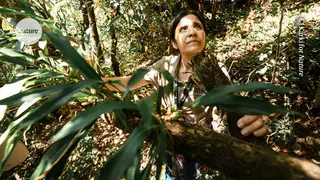
Wild orchids in Nepal, prized for their ornamental and medicinal uses, are being illegally harvested and traded, with over 47,000 kilograms legally exported between 2008 and 2016. Conservationist Reshu Bashyal leads a local taskforce in central Nepal’s subtropical forests to monitor and document poaching activities, focusing on species like Dendrobium longicornu. Despite Nepal’s 2017 implementation of CITES legislation, trade discrepancies persist due to unreported shipments and mislabeled species.
Between 2008 and 2016, Nepal legally exported over 47,000 kilograms of wild-collected orchids, primarily from subtropical forests in central regions like Chitlang and Makawanpur, where species such as Dendrobium longicornu—known for its black-haired canes and fragrant blooms—are abundant. Despite Nepal’s formal adoption of CITES regulations in 2017, discrepancies persist in trade data, with unreported shipments and mislabeled species undermining enforcement. All but two of Nepal’s more than 500 orchid species are listed under CITES Appendix II, requiring management plans to ensure sustainable harvesting; however, no such plans have been developed, rendering all orchid trade effectively illegal under national law. Conservationist Reshu Bashyal, working with Greenhood Nepal and local forest officials, leads a community-based anti-poaching taskforce in these regions, training locals to monitor and document poaching signs. Her research began in 2018 during a conifer conservation project, when she discovered widespread harvesting of orchids for ornamental and medicinal use—especially species like Satyrium nepalense and Pleione praecox—driven by demand in regional and international markets. The taskforce’s efforts aim to bridge the gap between legal frameworks and on-the-ground realities, empowering local communities with data and conservation knowledge. Yet, enforcement remains weak, and the lack of formal management plans means that even legal trade is not fully verifiable, leaving the long-term survival of many species uncertain.
The story highlights a growing challenge in biodiversity conservation: the difficulty of enforcing international agreements like CITES when domestic implementation lags and local economies depend on resource extraction. By focusing on orchids—plants with high cultural and economic value—Bashyal’s work underscores how conservation efforts must engage local communities as partners rather than just enforcers. The involvement of Greenhood Nepal and community taskforces may foster sustainable stewardship, potentially reducing illegal harvesting while preserving livelihoods. Comparable to earlier efforts in the Himalayan region to protect medicinal plants like Panax ginseng, this initiative could serve as a model for community-led conservation in ecologically sensitive areas. However, the impact remains uncertain: without formal management plans or reliable monitoring systems, the taskforce’s data may not influence policy or trade regulation. What may emerge is a shift toward decentralized, locally informed conservation, but only if authorities recognize and integrate grassroots findings into national frameworks. The next critical step—whether the government will develop required management plans—will determine whether this effort becomes a scalable solution or remains a localized experiment.