Beijing Expands Smart-City Technologies in Yizhuang, Despite Data Integration Challenges
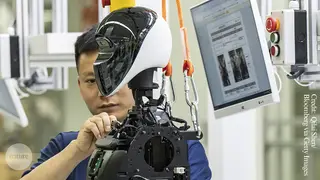
In Yizhuang, a high-tech district of Beijing, AI-powered traffic systems have reduced average traffic stops by 40.6% and increased travel speeds by 15.1% through green-wave corridors. The area, known as Beijing E-Town, serves as a flagship demonstration zone for autonomous vehicles and robotics, hosting public showcases of emerging technologies. However, integrating data across Beijing’s innovation hubs remains a persistent challenge for scaling smart-city ambitions.
In Yizhuang, a high-tech district within Beijing known as Beijing E-Town, AI-driven traffic management systems have significantly improved urban mobility. Through the implementation of green-wave corridors—routes synchronized to minimize stops—average traffic stops have decreased by 40.6%, while average travel speeds have risen by 15.1%, according to local reports. These improvements stem from real-time data collected by road cameras and sensors, processed at a local control center, and delivered via apps to drivers with recommendations on speed and lane use. The district, established in the early 1990s by the Beijing Municipal People’s Government, was designed as a flagship smart-city demonstration zone. It now serves as a hub for autonomous vehicle testing and robotics innovation, frequently hosting public showcases of emerging technologies. The initiative reflects Beijing’s broader ambition to lead in AI and intelligent infrastructure, positioning Yizhuang as a model for scalable urban innovation. However, despite these successes, integrating data across Beijing’s various innovation hubs remains a persistent obstacle. The lack of interoperability between systems limits the potential for citywide scaling, raising questions about how effectively the city can replicate Yizhuang’s achievements elsewhere. The outcome of this integration challenge—whether resolved through policy, technical standards, or centralized coordination—remains uncertain.
The success of Yizhuang’s smart traffic systems could influence how other megacities approach urban congestion, particularly in China’s rapidly expanding urban centers. If data integration challenges are overcome, similar AI-powered corridors may improve travel efficiency and reduce emissions across other Chinese cities. However, the current fragmentation across innovation zones may delay broader adoption, potentially reinforcing digital silos. This situation mirrors earlier efforts in Singapore’s Smart Nation initiative, where pilot projects showed promise but faced delays due to inter-agency data coordination issues. The real-world impact may be most felt by daily commuters, who could experience smoother travel, while logistics and public transit operators may benefit from more predictable travel times. On a larger scale, the outcome could shape investment in urban tech infrastructure, influencing private-sector participation and public procurement strategies. What remains unclear is whether Beijing will prioritize standardization or allow localized solutions to persist. The next phase will likely depend on whether city planners can establish unified data governance frameworks—something that could either accelerate or stall the broader smart-city vision.