Composer Zoe Sarnak Brings Science to Broadway with Galileo and Higgs Boson Musicals
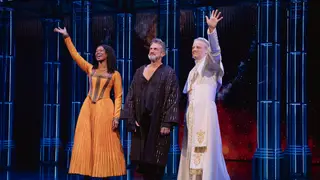
Composer Zoe Sarnak has created a rock and indie pop-inspired musical about Galileo Galilei, portraying his struggle between scientific discovery and religious authority. She is now developing two additional STEM-themed musicals: one based on the documentary *Particle Fever* about the Higgs boson discovery, and another adapting the film *A Beautiful Mind*. The show, set to open on December 6, 2026, blends historical drama with music that reflects both Galileo’s revolutionary ideas and his personal faith.
Composer Zoe Sarnak, known for her dual background in molecular biology and music, has brought Galileo Galilei’s 17th-century scientific rebellion to life on Broadway through a rock and indie pop-inspired musical set to open on December 6, 2026. The production, co-composed with Michael Weiner, dramatizes Galileo’s conflict with the Catholic Church over heliocentrism, portraying him as a defiant yet deeply spiritual figure. The show’s music reflects this duality—using explosive rock rhythms to convey Galileo’s revolutionary ideas and more contemplative, Christian rock-inspired melodies to underscore his faith. Sarnak’s scientific training, including hands-on work in a virology lab during her undergraduate years, informs her compositional approach, where she sees parallels between the layered complexity of molecular biology and the structural intricacies of music. Her work on Galileo is part of a broader creative phase she describes as her “science era,” during which she is developing two additional STEM-themed musicals: an adaptation of the 2013 documentary *Particle Fever*, chronicling the discovery of the Higgs boson, and a stage version of the film *A Beautiful Mind*, based on mathematician John Nash’s life. The musical’s narrative arc, particularly Galileo’s friendship with Bishop Maffeo Barberini—later Pope Urban VIII—adds historical depth, highlighting how personal relationships intersected with institutional power. What remains unresolved is the full reception of the musical, the extent to which it will influence science communication in the arts, and how the upcoming Higgs boson and Nash adaptations will be received in the context of growing public interest in science narratives.
The musical *Galileo* could contribute to a broader cultural shift in how science is perceived, particularly by making scientific struggle and discovery emotionally resonant through music and theater. By framing Galileo as a rock star of ideas, the production may help demystify scientific conflict for mainstream audiences, potentially inspiring greater public engagement with science and its historical tensions. This approach echoes earlier efforts like *The Man Who Knew Infinity*, which brought mathematician Srinivasa Ramanujan’s story to film, but expands the genre into musical theater—a medium with broader emotional reach. The success of *Galileo* may encourage more collaborations between scientists and artists, possibly influencing STEM education by demonstrating how narrative and emotion can enhance scientific storytelling. If the Higgs boson musical and *A Beautiful Mind* adaptation follow suit, they may further normalize science as a subject for artistic exploration, potentially impacting funding, curriculum design, and public science literacy. However, whether these works will shift institutional attitudes or merely entertain remains uncertain. What to watch for is how audiences and critics respond to the blending of scientific rigor with theatrical spectacle—especially in an era where misinformation and science skepticism remain challenges.