AI as a Digital Translator for Scientific Sketches
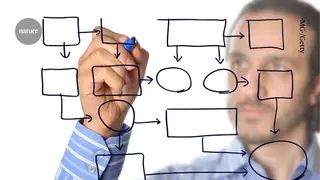
Researchers can use multimodal AI tools to convert hand-drawn scientific diagrams into editable digital formats without losing control over the original design. The process involves feeding a rough sketch to an AI that interprets its structure and outputs vector-based code compatible with tools like Draw.io. This method preserves the researcher’s intent while significantly reducing the time needed to produce publication-ready figures.
In November 2026, endocrinologist Ensar Aydemir from Sultan 1. Murat State Hospital in Edirne, Türkiye, detailed a practical application of multimodal AI in scientific workflow, specifically using tools like Google’s Gemini to convert hand-drawn research sketches into editable digital diagrams. The process involves photographing a rough sketch—such as a clinical study flowchart or signaling pathway—and uploading it to a vision-enabled AI model with a precise prompt requesting reconstruction in Draw.io-compatible XML format. The goal is not to redesign but to faithfully translate the original structure, preserving box positions, arrow directions, text content, and branching logic. Aydemir emphasizes that the AI acts as a “compiler,” not an illustrator, ensuring that every element remains editable in vector-based software. This method reduces the time to convert a five-minute sketch into a publication-ready figure from hours to minutes, while maintaining scientific fidelity. The approach is grounded in the need to avoid the pitfalls of image-generation AI, which often produces uneditable, flat outputs with errors in text or structure. Aydemir’s workflow reflects a growing trend in AI-assisted science: using AI as a digital translator rather than a creative agent. The specific tools mentioned—Gemini, Draw.io, Mermaid syntax—highlight a shift toward interoperable, open-source platforms that support reproducibility. What remains unresolved is how widely this method will be adopted across disciplines, whether institutional policies will adapt to support such workflows, and whether AI models will evolve to better interpret complex scientific notation without requiring extensive prompting.
This development could significantly streamline scientific communication, particularly for researchers in time-constrained environments like clinical medicine or lab-based research. By reducing the time spent on figure preparation, scientists may redirect effort toward data analysis or writing, potentially accelerating publication cycles. The broader impact may extend to academic publishing, where figure quality and reproducibility are increasingly scrutinized. If widely adopted, such AI tools may influence journal submission standards, encouraging more structured, editable figure formats. A comparable precedent is the shift from hand-drawn figures to digital tools like PowerPoint or Adobe Illustrator in the 1990s—initially met with resistance but eventually normalized. However, unlike those tools, AI-driven translation introduces new concerns about data provenance and model bias, especially if the AI alters subtle details during reconstruction. Institutions may need to develop guidelines on acceptable AI use in figure generation. What to watch for is whether open-source alternatives to proprietary models like Gemini will emerge, and whether journals begin requiring metadata about AI-assisted figure creation. The long-term effect may be a more standardized, efficient scientific workflow—but only if transparency and control remain with the researcher.