Mathematicians React to AI's Claimed Solution of the Riemann Hypothesis
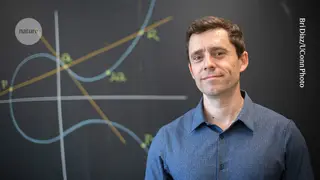
An artificial intelligence model has reportedly helped solve the Riemann hypothesis, one of mathematics' most enduring and prestigious unsolved problems, sparking widespread astonishment and debate within the mathematical community. The breakthrough has ignited discussions about the future of mathematical research, with some fearing the role of human intuition may be diminished. The development marks a pivotal moment in the intersection of AI and pure mathematics.
On 25 November 2026, a major breakthrough in mathematics was announced when an artificial intelligence model reportedly contributed to a solution of the Riemann hypothesis, one of the seven Millennium Prize Problems and a central mystery in number theory since its formulation by Bernhard Riemann in 1859. The claim emerged unexpectedly on a Friday, triggering immediate reactions across the mathematical community. While the exact model, its creators, or the institution behind the work are not specified in the report, the event follows months of growing speculation about AI’s ability to tackle complex mathematical challenges, including recent advances in automated theorem proving and pattern recognition in abstract algebra. The Riemann hypothesis, which concerns the distribution of non-trivial zeros of the Riemann zeta function and has profound implications for prime number theory, has resisted proof for over 160 years, making any credible solution a landmark achievement. Mathematicians such as Álvaro Lozano-Robledo, who previously considered the problem beyond AI’s current reach, now find themselves at the center of a paradigm shift. The development raises urgent questions about the role of human intuition in mathematical discovery, with some fearing that AI could diminish the creative, exploratory aspects of the discipline. What remains unresolved is whether the solution has undergone peer review, whether it is fully formalized, and how much of the proof was generated by the AI versus guided by human insight.
The announcement could reshape how mathematics is taught, practiced, and validated, potentially accelerating research in number theory, cryptography, and theoretical computer science—fields where the Riemann hypothesis has deep implications. If verified, the result may influence the security of encryption systems reliant on the unpredictability of prime numbers, though the immediate impact on cybersecurity remains uncertain. The broader scientific community may begin to rely more heavily on AI as a co-investigator, altering academic incentives and the structure of research teams. A comparable precedent is the 1994 proof of Fermat’s Last Theorem, which, while human-driven, took centuries to solve and required unprecedented collaboration. In contrast, this AI-led claim may signal a shift toward machine-assisted discovery, possibly marginalizing traditional pathways to insight. Institutions may need to reevaluate how they assess originality and authorship in mathematical publications. What to watch for next includes the peer-review process, whether the proof will be published in a major journal, and whether the AI model can be replicated or independently verified. The long-term effect on mathematical education—especially the teaching of intuition and problem-solving—may be profound, though it remains unclear how institutions will adapt.