Scientific American Hosts Book Club Discussion on the Historical Roots of Chemistry
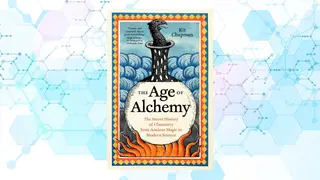
In December, Scientific American will host a book club event centered on Kit Chapman's book *The Age of Alchemy*, exploring the evolution of chemistry from ancient alchemical practices to modern scientific discipline. The discussion, featuring staff insights and audience participation, will highlight how early innovations shaped today’s understanding of matter, from stars to everyday materials. The event will culminate in a Science Quickly podcast episode on December 16, with additional commentary available in the Cultured newsletter.
In December 2026, Scientific American will host a book club event centered on Kit Chapman’s *The Age of Alchemy: How Early Innovators Shaped Modern Chemistry*, exploring the historical trajectory from ancient alchemical practices to the formalized science of chemistry. The event will culminate in a dedicated episode of the Science Quickly podcast on December 16, featuring insights from Scientific American staff and audience participation. The book examines how early experimentation with substances—such as elixirs and metals—laid foundational principles for modern chemistry, influencing everything from material science to planetary understanding. The discussion will highlight how alchemical traditions, once dismissed as mystical, contributed to empirical methods and the eventual development of the scientific method. The event is part of a broader effort by Scientific American to engage the public with science through accessible formats like book clubs and podcasts, with additional commentary available in the Cultured newsletter, which focuses on science in pop culture. The organization, known for its award-winning science journalism, is using this initiative to deepen public understanding of chemistry’s role in everyday life and future challenges, such as sustainability and health.
The event may strengthen public trust in science by demystifying chemistry through historical narrative, potentially increasing engagement with scientific literacy. By framing chemistry as a human endeavor rooted in curiosity and trial rather than abstract theory, Scientific American could help bridge gaps between scientific communities and general audiences. This approach mirrors earlier public science initiatives, such as Carl Sagan’s *Cosmos*, which used storytelling to popularize complex ideas. The integration of a podcast and newsletter suggests a multi-platform strategy to reach diverse demographics, possibly influencing education curricula or informal learning spaces. If successful, such efforts could inspire similar programs across media outlets, reinforcing science communication as a vital public service. However, the long-term impact remains uncertain—whether this event will shift public perception or merely add to a growing body of science content without measurable change in understanding. What to watch for is whether other scientific publishers adopt similar narrative-driven formats to engage audiences in foundational disciplines.