Slime Molds Outperform Mathematicians in Solving Complex Network Optimization
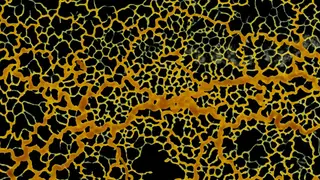
A single-celled organism, Physarum polycephalum, demonstrates remarkable ability in creating efficient network structures, outperforming human mathematicians on Steiner tree problems. These problems involve finding the shortest possible connections between points, a challenge critical in designing cost-effective transportation systems. Despite lacking a brain or nervous system, the slime mold naturally optimizes its growth patterns to solve such complex spatial puzzles.
In January 2010, researchers at Hokkaido University in Japan conducted a landmark experiment using the slime mold *Physarum polycephalum* to model the Tokyo metropolitan rail network. They arranged oat flakes in a pattern mimicking 36 key urban centers, including Tokyo, and placed the organism on the central node. Over 26 hours, the mold extended tendrils across the grid, eventually forming a network that closely mirrored the actual rail system’s efficiency, fault tolerance, and cost structure. This demonstrated the organism’s ability to solve Steiner tree problems—mathematical challenges involving finding the shortest possible network connecting multiple points—without a brain or nervous system. The experiment built on earlier work by French mathematician Joseph Diez Gergonne in 1811 and Swiss mathematician Jakob Steiner, whose names are tied to the problem’s formalization. Despite over two centuries of effort by human mathematicians and computer scientists, these problems remain computationally intractable for large-scale applications. The slime mold’s success, however, suggests that biological processes may offer alternative, scalable solutions to optimization challenges in infrastructure planning. The researchers, led by Atsushi Tero, published their findings in *Science*, highlighting the potential of biologically inspired adaptive network design. What remains unresolved is whether such systems can be scaled beyond laboratory conditions or integrated into real-world urban planning tools. While the mold’s natural behavior offers a blueprint, translating it into digital algorithms or engineering practices requires further study.
The discovery could influence how cities approach infrastructure design, particularly in transportation and utility networks, where cost and efficiency are paramount. If slime mold-inspired algorithms are developed into practical tools, they may help planners reduce material use and construction costs, especially in complex urban environments. This could benefit public agencies, engineering firms, and environmental advocates seeking sustainable development. A comparable precedent is the use of ant colony optimization in logistics, where decentralized, rule-based systems mimic insect behavior to solve routing problems. However, unlike ants, slime molds operate without any form of memory or communication, making their success even more surprising. The broader implication is a shift toward biomimicry in computational problem-solving—where nature’s solutions inform technology, not just in design but in algorithmic logic. Still, it remains unclear whether these biological patterns can be reliably replicated in software or scaled to global infrastructure challenges. Future research may explore hybrid models combining biological observation with machine learning, but ethical and practical questions about relying on non-human intelligence in public planning remain open.