Climate Change Could More Than Double Cloud-to-Ground Lightning by 2100
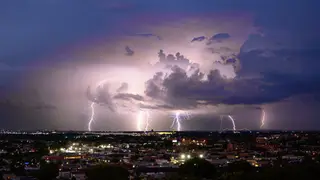
A new study published in Earth's Future projects that cloud-to-ground lightning strikes could increase by 76% to 140% between 1995 and 2100 due to rising global temperatures. The research, led by Andreas Krause at the Technical University of Munich, attributes the rise to enhanced electric field formation from increased heat rising from the Earth's surface. This trend could significantly increase risks of fatalities and wildfires, particularly in regions like India that already experience high strike frequencies.
A new study published in Earth’s Future projects that cloud-to-ground lightning strikes could increase by 76% to 140% between 1995 and 2100 due to climate change, potentially more than doubling historical levels. The research, led by Andreas Krause at the Technical University of Munich, identifies rising surface heat as a key driver, enhancing atmospheric instability and electric field formation within thunderstorms. This trend builds on observed data showing an 11% increase in global lightning activity between 1995 and 2014 compared to early 20th-century averages. Regions such as India, already prone to frequent strikes, may face heightened risks of lightning-related fatalities and wildfires. The study also notes that colder regions like Alaska could see the most dramatic increases, with prior research indicating Arctic lightning has already risen by up to 300% in recent years. The mechanism hinges on how thunderstorms develop: as warm air rises, it intensifies charge separation within clouds, increasing the likelihood of cloud-to-ground discharges. While the U.S. sees about 21 lightning-related deaths annually and 24,600 fires, the global impact may be far greater in vulnerable, densely populated areas with limited early warning systems. The study’s authors, including Krause, express surprise at the magnitude of projected increases, suggesting prior models may have underestimated the sensitivity of lightning to warming. What remains unresolved is how these projections will be refined with real-time climate modeling and whether adaptation strategies—such as improved early warning systems or infrastructure hardening—can keep pace with the projected rise.
The projected surge in lightning strikes could significantly affect public safety, infrastructure, and wildfire management, especially in regions with high population density and vulnerable power grids. Countries like India, where lightning already causes hundreds of deaths annually, may face escalating humanitarian and economic burdens, potentially straining emergency response systems and healthcare infrastructure. In the U.S., increased lightning could exacerbate wildfire risks in already fire-prone areas like California, affecting insurance markets, land-use planning, and federal firefighting budgets. The Arctic’s rapid increase in lightning—already up 300%—may accelerate permafrost thaw, releasing stored greenhouse gases and creating a feedback loop that could further intensify climate change. This scenario mirrors the 2010s’ growing awareness of Arctic amplification, where early warnings of environmental shifts were followed by cascading impacts. While the study’s findings are grounded in atmospheric physics and climate modeling, the exact timing and regional variability of lightning increases remain uncertain. What may follow is a push for more resilient infrastructure, expanded weather monitoring networks, and updated disaster preparedness policies—particularly in developing nations. The broader implication is that climate change’s impacts extend beyond temperature rise, influencing extreme weather patterns in ways that could reshape risk assessments across sectors.