Rediscovering the Medieval Astronomer Who Advanced Trigonometry in England
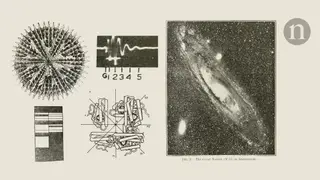
Richard of Wallingford, a 14th-century English mathematician and astronomer, pioneered the use of trigonometry in England through his innovative astronomical instruments. His most notable creation, the Rectangulus, was a complex device designed to calculate planetary positions with greater precision. The article revisits his legacy as modern experiments begin at CERN, drawing parallels between medieval ingenuity and contemporary particle physics.
Richard of Wallingford, a 14th-century English mathematician and astronomer, is recognized for introducing advanced trigonometric methods to England through his development of the Rectangulus, a sophisticated astronomical instrument designed to calculate planetary positions with unprecedented precision. His work, though rooted in medieval science, laid foundational principles that resonate with modern computational approaches in physics and astronomy. In 2026, new experiments at CERN—specifically on a recently completed particle accelerator—have drawn renewed attention to Wallingford’s legacy, with researchers noting conceptual parallels between his mechanical precision and today’s high-accuracy particle detection systems. The article, published in Nature’s archive on 24 November 2026, revisits these historical developments in the context of contemporary particle physics, highlighting how past innovations can inform current scientific endeavors. The piece is part of a broader series exploring historical milestones in science, with access to the original text available through institutional subscriptions or Nature+.
The background to this story lies in the growing interest in historical scientific figures whose work, though overlooked in their time, now appears prescient. Wallingford’s contributions were largely unknown outside specialized circles until recent archival rediscoveries and interdisciplinary studies began linking medieval scientific instruments to modern computational models. The article references CERN’s new accelerator as a site where such historical echoes are being actively explored, though it does not specify which experiments or teams are involved. The organizations mentioned—Nature, CERN, and Springer Nature—play roles in disseminating and archiving such research, with Nature’s platform serving as a conduit for historical reflection on current science. What remains unresolved is whether these parallels are purely metaphorical or if they inspire actual methodological innovations in particle physics. The article does not detail future research plans or funding directions, leaving open the question of whether Wallingford’s legacy will influence next-generation instrumentation.
The story may influence how scientific institutions frame historical narratives to inspire innovation, particularly in fields like particle physics where long-term projects require sustained public and institutional support. By linking medieval ingenuity to cutting-edge experiments at CERN, the article could encourage a broader appreciation of historical science as relevant to modern discovery, potentially shaping science communication strategies. This approach may resonate with audiences seeking meaning in scientific progress, especially in an era where AI and automation dominate headlines. A comparable precedent is the renewed interest in Ada Lovelace’s work during the rise of computing, which helped legitimize early computer science as a field of intellectual importance. Here, Wallingford’s legacy could similarly serve as a symbolic bridge between past and present, reinforcing the idea that foundational breakthroughs often emerge from unexpected sources. However, the actual impact on research outcomes or funding remains uncertain—what is clear is that such narratives may shape institutional culture and public engagement. The next step to watch is whether CERN or other research bodies formally acknowledge or integrate historical models into their current methodologies, which could signal a deeper shift in how science values its past.