George Whitesides, pioneering chemist and mentor to generations, passes at 87
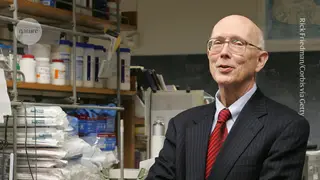
George Whitesides, a transformative figure in chemistry known for bridging disciplines to tackle global challenges, has died at the age of 87. He spent most of his academic career at Harvard University in Cambridge, Massachusetts, where he mentored hundreds of scientists across diverse fields. His legacy includes groundbreaking work that expanded the scope of chemistry beyond traditional boundaries.
George Whitesides, a pioneering chemist and longtime faculty member at Harvard University in Cambridge, Massachusetts, passed away on 19 November 2026 at the age of 87. His son, George Whitesides Jr., a U.S. congressman representing California, confirmed the death on the social media platform X, noting that his father died at home surrounded by family. Throughout his career, Whitesides was recognized for his interdisciplinary approach, consistently moving between scientific domains to address pressing global challenges. His work fundamentally expanded the boundaries of chemistry, influencing fields ranging from materials science to biotechnology. Though the article does not specify his most cited contributions, his legacy is defined by mentorship—having guided hundreds of scientists across diverse disciplines. His ability to shift focus and apply chemical principles to real-world problems exemplified a broader trend in science toward convergence and problem-driven research. The absence of further details on his final projects or institutional affiliations beyond Harvard leaves open questions about the current status of his ongoing work and the future of research groups he led. It remains unknown whether his laboratory or foundation will continue his initiatives, or how his intellectual legacy will be institutionalized.
Whitesides’s death marks the passing of a key architect in the evolution of modern scientific collaboration, where disciplines increasingly blur to address complex global issues. His career may serve as a model for how science can remain agile and responsive, particularly in fields like AI-science, where cross-domain integration is essential. His influence could ripple through emerging research ecosystems that prioritize applied, interdisciplinary innovation—potentially shaping how institutions design curricula or fund projects. A comparable precedent is the impact of Linus Pauling, whose work in both chemistry and molecular biology similarly redefined scientific boundaries. The broader implications for science policy and funding may include renewed emphasis on supporting researchers who pivot across fields, especially those tackling climate change, health equity, or sustainable materials. What remains to be seen is whether his legacy will inspire new frameworks for mentorship or institutional support for boundary-crossing science, particularly in an era where AI tools are accelerating discovery across domains.