How Cells' Built-in DNA Repair Mechanisms Enable Modern Gene Editing
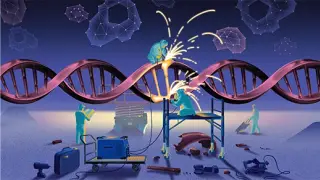
Cells face up to 100,000 DNA damage events daily from metabolic byproducts and environmental factors like radiation and chemicals. Molecular biologist Björn Schumacher from the University of Cologne explains that despite DNA's inherent instability, natural repair systems rapidly fix these injuries to prevent cell malfunction, death, or cancer. These same repair mechanisms are essential for the success of gene-editing technologies like CRISPR, which rely on the cell's innate ability to mend broken DNA strands.
In 1994, Maria Jasin’s team at Memorial Sloan Kettering Cancer Center demonstrated that intentionally creating a double-strand break in DNA could trigger the cell’s repair machinery to incorporate a new gene sequence, laying a foundational principle for modern gene editing. This discovery revealed that the cell’s natural repair systems, rather than being a passive defense, could be harnessed as a tool for genetic modification. Today, technologies like CRISPR rely on this mechanism: scientists induce targeted DNA breaks, which the cell then attempts to repair using its innate systems—either through error-prone non-homologous end joining or more precise homology-directed repair. Björn Schumacher of the University of Cologne emphasizes that cells endure up to 100,000 DNA damage events daily from metabolic byproducts and environmental stressors like UV radiation and chemicals, underscoring the evolutionary necessity of robust repair systems. These systems, which evolved alongside DNA itself, are now central to biomedical innovation. Researchers such as Penny Jeggo from the University of Sussex highlight that DNA’s functional accessibility—its need to be unwound and read—makes it inherently vulnerable, yet this same vulnerability is exploited in gene editing. The key unresolved question is how to consistently steer repair toward precise outcomes without off-target effects or unintended mutations, especially in therapeutic applications. While CRISPR has revolutionized genetic research, the long-term safety and efficacy of editing in human tissues remain under investigation, with clinical trials still in early phases.
The ability to leverage cellular DNA repair mechanisms for gene editing could transform medicine by enabling cures for inherited diseases like sickle cell anemia or cystic fibrosis. Patients and families affected by such conditions may benefit from therapies that correct genetic defects at the source, potentially offering permanent solutions. However, the technology also raises ethical and safety concerns, particularly around germline editing and unintended consequences in future generations. The precedent of early recombinant DNA research in the 1970s, which sparked global debate and led to regulatory frameworks, suggests that public and institutional oversight may be needed as gene editing advances. Institutions like the National Institutes of Health and the World Health Organization may play key roles in shaping guidelines. Meanwhile, biotech companies investing in CRISPR-based therapies could see significant market growth, but regulatory delays or safety setbacks could disrupt timelines. The broader impact may extend to agriculture, where gene-edited crops could improve resilience, though public skepticism remains a barrier. What remains uncertain is how quickly these therapies will transition from lab success to widespread clinical use, and whether regulatory systems can keep pace with scientific innovation.