Terence Tao Explores the Real-World Power of Mathematical Principles in New Book
Terence Tao, a Fields Medallist often dubbed the 'Mozart of maths,' presents in his book Six Maths Essentials how fundamental mathematical concepts can illuminate real-world phenomena. The book illustrates how curiosity-driven exploration of numbers and structures leads to practical insights across scientific disciplines. Tao also discusses the future of mathematics in the age of AI, advocating for a 'Maths 2.0' paradigm to adapt to new computational tools.
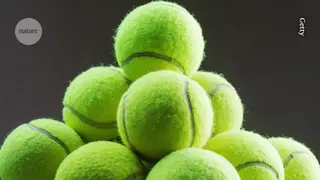
In 1998, a centuries-old mathematical problem concerning the most efficient way to stack spheres was finally proven, marking a milestone in discrete geometry and packing theory. This achievement, though abstract in origin, has implications in materials science, coding theory, and even data storage. Terence Tao, a Fields Medalist often hailed as the "Mozart of maths," explores such foundational mathematical ideas in his 2026 book, *Six Maths Essentials: How to Model the World*, published by Pelican. The book distills core mathematical principles—such as symmetry, optimization, and structure—into accessible narratives that demonstrate their real-world relevance across physics, biology, and engineering. Tao’s work reflects a broader shift in how mathematics is perceived: no longer solely a theoretical pursuit, but a dynamic tool for modeling and predicting phenomena in complex systems. His advocacy for a "Maths 2.0" paradigm underscores the need to adapt mathematical education and research to the rise of AI, where computational power can augment human intuition. The book’s release coincides with growing interest in AI’s role in mathematical discovery, raising questions about the future of human-led insight versus machine-driven proof. What remains unresolved is how deeply AI will reshape mathematical practice—whether it will serve as a collaborator or a replacement—and how institutions will respond to the changing landscape of mathematical inquiry.
Tao’s call for a "Maths 2.0" could influence how universities and research institutions restructure curricula to integrate computational tools and interdisciplinary thinking. If adopted, this shift may enhance innovation in fields like cryptography, climate modeling, and AI ethics, where mathematical rigor is essential. The broader impact may extend to tech companies and government agencies that rely on mathematical modeling for decision-making, potentially increasing demand for hybrid expertise in both pure mathematics and machine learning. A comparable precedent is the integration of computers into physics during the mid-20th century, which transformed theoretical and experimental work. However, unlike that transition, Tao’s vision emphasizes human-machine collaboration rather than automation. The next phase to watch is how educational systems respond—whether they will prioritize algorithmic literacy alongside classical theory. The long-term effect could be a more inclusive, adaptable mathematical culture, though risks remain around overreliance on AI-generated proofs without human verification. The outcome may depend on whether institutions foster critical engagement with AI tools or treat them as black boxes.