Chess.com Expands Beyond Chess with New Classic Games Platform Featuring 11 Traditional Titles
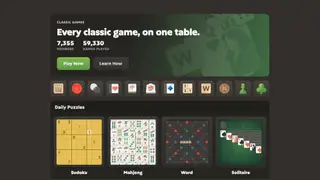
Chess.com has launched a new Classic Games platform that adds 11 non-chess games including backgammon, checkers, go, mahjong, shogi, xiangqi, sudoku, solitaire, hearts, and a Scrabble alternative called word. The platform, now in public beta, aims to build a community for classic games that lack dedicated online spaces, drawing on user feedback and market research. The expansion follows the company’s earlier launch of Gambit, a gambling-free poker site.
Chess.com launched its new Classic Games platform on November 21, 2026, in public beta, introducing 11 non-chess games including backgammon, checkers, go, hearts, mahjong, shogi, xiangqi, sudoku, solitaire, and a Scrabble alternative called word. The platform is accessible via web and new iOS and Android apps, featuring familiar elements from Chess.com such as rating systems, leaderboards, in-game lessons, and AI-powered bots like Martin, who remains the lowest-rated across all games. The expansion follows the earlier launch of Gambit, a gambling-free poker site, signaling a strategic pivot beyond chess while maintaining the core product’s dominance. The company’s chief growth officer, Albert Cheng, cited community feedback and market research as key drivers in selecting the games, emphasizing those with long-term learning curves and existing social communities. Despite the diversification, Chess.com remains focused on its core game, with less than 1% of its workforce dedicated to developing new titles. AI played a central role in accelerating development, particularly in coding, leveraging the existing code base and design system to reduce time-to-market. The company’s long-standing relationship with AI—dating back to early chess-computer interactions like Deep Blue’s 1996 match—has fostered a culture comfortable with AI integration, though human design and art remain central. What remains unclear is how the platform will sustain engagement across such diverse game types, or whether the company will expand further into non-strategy or casual genres.
The expansion of Chess.com into a broader classic games platform could reshape how digital communities form around niche, analog-style games that previously lacked dedicated online spaces. By leveraging its established infrastructure and AI-assisted development, Chess.com may set a precedent for other platforms to scale beyond their original domains using modular systems. This model could influence other legacy game companies or digital recreation platforms aiming to diversify without building from scratch. The success of Classic Games may also impact the broader gaming industry’s approach to AI, demonstrating a balanced use—accelerating production while preserving human creativity in design. A comparable case is how Netflix repurposed its streaming tech to expand from films to original series, creating new content ecosystems. However, unlike Netflix’s content-driven model, Chess.com’s strategy relies on community and learning curves, which may be harder to sustain across varied game types. What remains to be seen is whether the platform can maintain user retention beyond novelty, especially as players may gravitate toward specialized sites for games like mahjong or sudoku. The long-term viability of this multi-game model—and whether it signals a broader trend toward platform consolidation in digital leisure—will depend on user engagement metrics and future product decisions.