Scientists Use Chemistry to Imagine the Smells of Distant Planets
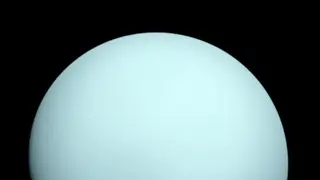
Astronomers and physicists, including Bulgaria's Boyko Ranguelov, are using spectroscopic data and atmospheric models to infer the odors of planets like Uranus, Jupiter, and Saturn based on their chemical compositions. While humans will never physically smell these worlds, researchers analyze gases such as methane and ammonia to estimate their sensory properties. Ranguelov, a physics professor, studies what he calls the 'organoleptic properties' of planets—how they might affect human senses like smell.
In November 2026, Bulgarian physicist Boyko Ranguelov, a professor at the University of Mining and Geology, presented a novel scientific inquiry into the organoleptic properties of planets—specifically, how their atmospheric chemistry might translate into human sensory experiences like smell. Drawing on spectroscopic data, atmospheric models, and known chemical compositions of gas giants like Jupiter, Saturn, and Uranus, Ranguelov concluded that these planets likely emit odors akin to rotten eggs or human flatulence due to high concentrations of hydrogen sulfide, ammonia, phosphine, and hydrogen cyanide. He also speculated that Mars, rich in iron, may smell like rust with a hint of gunpowder, while the molecular cloud Sagittarius B2 could carry a complex aroma resembling vodka, sour cherry liquor, and pickled cucumbers—though he noted such a scent would require a "nose the size of several light-years" to detect. These conclusions stem from his 2022 presentation to astronomers in Bulgaria and Serbia, where he explored the sensory implications of planetary chemistry. While no human has ever physically smelled another planet, Apollo astronauts reported that lunar samples carried a scent similar to burnt gunpowder or safety matches, which dissipated upon exposure to oxygen in the spacecraft. Ranguelov’s work, though speculative, reflects a growing trend in interdisciplinary science that uses known chemical profiles to imagine sensory experiences beyond direct observation. What remains unresolved is whether such sensory projections can be validated or refined with future space missions or advanced remote sensing tools.
Ranguelov’s work may contribute to public engagement with planetary science by making abstract data more relatable through sensory metaphors. While not a direct tool for exploration, this imaginative approach could help science communicators convey complex atmospheric compositions to non-specialists, potentially increasing interest in space research and funding. The idea of "smelling" distant worlds might also influence science education, encouraging students to think about planetary environments in more visceral, sensory terms. A comparable precedent is the use of analogies in early astronomy—such as describing stars as "diamonds in the sky"—which helped popularize cosmic concepts. However, unlike those metaphors, Ranguelov’s claims involve specific chemical linkages, which could blur the line between scientific inference and artistic interpretation if not carefully framed. The broader impact may be seen in how science journalism presents speculative findings: if such stories gain traction, they could shape public expectations about what space exploration will reveal. Still, the lack of empirical validation means these odors remain theoretical. What to watch for is whether similar sensory modeling gains traction in astrobiology or exoplanet research, particularly as new telescopes like the James Webb Space Telescope continue to expand our chemical knowledge of distant worlds.