Testing Apple's Siri Recap: Can AI Summarize Your Life Without Compromising Privacy?
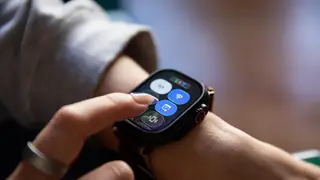
Victoria Song tested Apple's Siri Recap feature on the Apple Watch Ultra 4, which uses on-device AI to ambiently listen to conversations and generate daily summaries. The system prioritizes privacy by processing audio locally, avoiding cloud transmission, but the tradeoff includes limited accuracy and context. Despite Apple's privacy-focused design, Song remains unconvinced the benefits justify the experience.
Victoria Song tested Apple’s Siri Recap feature on the Apple Watch Ultra 4 during November 2026, using it for two weeks to assess its ability to ambiently listen to conversations and generate daily summaries. The feature, available only on the 2026 Apple Watch Ultra 4 due to its S11 chip, processes audio locally within a secure exclave, never sending raw data to the cloud. All recaps are ephemeral—users can set them to self-destruct after one, three, or seven days—and no transcripts or audio files are stored, preserving privacy. Siri Recap must be manually enabled, with users able to schedule its activation (e.g., only during office hours), and Apple requires explicit disclosure to others when recording is active. The feature is positioned as a “backup notetaker” for scenarios like parent-teacher conferences or lectures, aiming to help users remember key points without distraction. However, Song found the summaries often inaccurate and contextually flawed, such as misrepresenting a TikTok about a health crisis as a personal conversation. This stems from Apple’s design choice to avoid training on user voices, which enhances privacy but limits AI’s ability to distinguish between background noise and meaningful dialogue. The absence of an audio cue or visual indicator during recording complicates ethical transparency, requiring users to explain the system manually when questioned.
Siri Recap exemplifies a growing tension in AI-powered personal assistants: the tradeoff between privacy and utility. While Apple’s on-device processing and ephemeral data model could set a benchmark for ethical design, the resulting functional limitations may deter mainstream adoption. If users find summaries unreliable or unhelpful, the feature risks becoming a niche tool, undermining its intended purpose of enhancing memory and presence. This mirrors earlier skepticism around Google’s now-discontinued Google Glass, where privacy concerns and limited utility led to public backlash. Apple’s approach may influence competitors like Amazon, whose Bee Frontier takes a more invasive, cloud-dependent route—potentially making Apple’s model more appealing in the long term, especially as regulatory scrutiny on data collection intensifies. However, the success of Siri Recap may depend on whether users prioritize privacy over precision. The broader impact could be a shift toward more transparent, user-controlled AI tools, but only if companies can balance security with meaningful functionality. What remains uncertain is whether consumers will accept diminished performance for stronger privacy, or if future iterations will find a viable middle ground.