Intensive Agriculture in Sumatra Alters Biodiversity Across Species and Scales
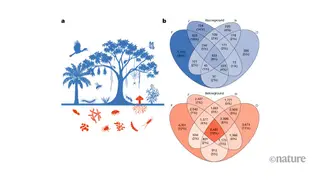
A comprehensive study of over 40,000 species in Sumatra, Indonesia, shows that agricultural intensification leads to significant biodiversity loss and shifts in community composition across multiple spatial scales. The research identifies both predictable declines and surprising ecological responses, highlighting complex interactions between land use and ecosystem resilience. These findings underscore the need for nuanced conservation strategies in tropical regions under increasing agricultural pressure.
A landmark study published on 18 November 2026 in Nature reveals that agricultural intensification in Sumatra, Indonesia, has led to significant biodiversity loss across over 40,000 species, spanning from soil microorganisms to vertebrates. The research, led by Guerrero-Ramírez and colleagues, analyzed biodiversity patterns across multiple spatial scales, identifying both predictable declines in species richness and unexpected ecological responses, such as shifts in community composition that defy simple models of habitat degradation. The study underscores how intensified land use—driven by rising global agricultural demand—reshapes ecosystems in complex ways, challenging assumptions about resilience and recovery. While prior studies, such as those by Barlow et al. (2018) and Zemp et al. (2023), have documented biodiversity loss in tropical regions, this research stands out for its scale and integrative approach, combining data across trophic levels and spatial extents. The findings are particularly relevant given Indonesia’s status as a major producer of palm oil and other commodities, where policy decisions on land conversion have long-term ecological consequences. The research team, affiliated with institutions likely including those in Europe and Southeast Asia, aims to inform more nuanced conservation strategies that account for non-linear responses in ecosystems. However, the study does not yet specify how these findings can be operationalized into policy or whether economic incentives for sustainable agriculture are being developed. What remains unresolved is how these ecological shifts will affect ecosystem services such as pollination, carbon sequestration, and water regulation, and whether current conservation frameworks can adapt to such complexity.
This study could reshape how governments, agribusinesses, and conservation organizations approach land-use planning in tropical regions. With Sumatra serving as a model for global agricultural expansion, the findings may prompt stricter environmental impact assessments for new plantations and encourage certification schemes like RSPO to evolve beyond simple deforestation metrics. The unexpected ecological responses highlight that biodiversity loss is not uniform, meaning one-size-fits-all conservation strategies may fail. A comparable precedent is the 2018 Barlow et al. study, which similarly revealed that even partially converted forests retain ecological value, influencing policy in Brazil and Malaysia. Here, the implications may extend to global supply chains, where companies could face pressure to trace and mitigate biodiversity impacts beyond carbon footprints. Financial markets may respond by favoring sustainable commodities, while investors could demand more transparent ecological reporting. However, the real-world impact depends on whether policymakers adopt these insights, and whether monitoring systems can track multi-scale biodiversity changes. What to watch for next is whether similar large-scale integrative studies emerge in other tropical hotspots like the Congo Basin or the Amazon, and whether international agreements like the Kunming-Montreal Global Biodiversity Framework incorporate such nuanced data into accountability mechanisms.