ASUS, Dell, and MSI Launch New RTX Spark Compact Desktops for Local AI Workloads
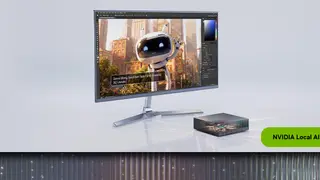
NVIDIA has launched RTX Spark compact desktops from ASUS, Dell, and MSI, offering up to 128GB of unified memory and a 20-core Grace CPU paired with a Blackwell RTX GPU for local AI processing. These systems enable continuous operation of AI agents, image and video generation, and model fine-tuning without relying on cloud APIs. The desktops support native Windows on Arm apps, DLSS Ray Reconstruction in Blender, and ComfyUI workflows, all on a single Windows PC.
On November 18, 2026, ASUS, Dell, and MSI launched the first RTX Spark compact desktops powered by NVIDIA’s Blackwell architecture, marking a significant step in bringing high-performance local AI computing to mainstream users. These systems feature a 20-core NVIDIA Grace CPU, a Blackwell RTX GPU with 6,144 CUDA cores, and up to 128GB of unified memory, enabling petaflop-level AI performance. Designed for continuous operation, the desktops support local execution of large language models (up to 120 billion parameters), real-time rendering of 90GB+ 3D scenes, and high-resolution video editing without cloud dependency. The hardware is optimized for native Windows on Arm applications, with support for DLSS Ray Reconstruction in Blender and ComfyUI workflows, all within a single Windows PC. This shift reflects NVIDIA’s broader strategy to move AI processing from cloud-centric models to local, on-device systems, reducing latency and API costs while improving data privacy. The ecosystem is expanding rapidly, with Acer, GIGABYTE, HP, and Microsoft’s Surface RTX Spark Dev Box expected to follow. Adobe’s integration of TensorRT-RTX acceleration into Premiere Pro, Photoshop, and Substance 3D Painter further strengthens the platform, enabling faster AI-driven editing, RAW processing, and 3D texturing. Developers can leverage tools like Hermes Agent and NemoClaw blueprints for local AI agent deployment, while NVIDIA Switchyard enables hybrid cloud-local task routing. The collaboration with Adobe at MAX 2026 demonstrated how natural-language prompts can drive end-to-end creative workflows—from sketch to animated video—entirely on-device. What remains unresolved is the long-term scalability of local AI models, the energy efficiency of these systems, and whether the ecosystem will remain open or become increasingly locked into NVIDIA’s proprietary stack.
These RTX Spark desktops could redefine how creators, developers, and AI enthusiasts interact with computational resources, shifting power from centralized cloud providers to individual users. By enabling 24/7 operation of AI agents and local model fine-tuning, they may reduce reliance on cloud APIs, lowering costs and improving data sovereignty—particularly for sensitive or proprietary work. This could empower independent artists, small studios, and researchers who previously lacked access to high-end compute. The integration with Adobe’s creative suite may accelerate adoption among professionals, potentially disrupting traditional cloud-based creative workflows. A comparable precedent is the rise of local machine learning on consumer GPUs in the early 2020s, which democratized AI experimentation before cloud platforms dominated. However, unlike that era, today’s move is more tightly coupled with a single vendor’s hardware and software stack, raising concerns about vendor lock-in. The long-term impact may depend on whether third-party developers and open-source communities adopt the platform, or if it remains a closed ecosystem. What to watch for includes the performance of the upcoming Microsoft Surface RTX Spark Dev Box, the availability of Linux tools via WSL, and how quickly alternative frameworks emerge to support local AI beyond NVIDIA’s ecosystem.