California Bans Waymo’s Autonomous Vehicles from Freeways Over Safety Concerns
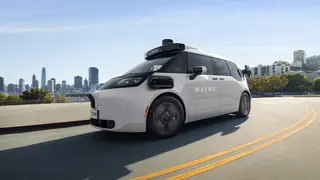
The California Department of Motor Vehicles has prohibited Waymo's autonomous vehicles from operating on state freeways due to repeated incursions into active construction zones and encounters with emergency vehicles, posing a public safety risk. The ban, effective since November 11, 2026, requires Waymo to demonstrate corrective measures before resuming freeway operations. Waymo has temporarily halted all freeway testing across its markets while continuing safe surface street operations in California and other regions.
On November 11, 2026, the California Department of Motor Vehicles (DMV) issued a formal ban prohibiting Waymo’s autonomous vehicles from operating on state freeways due to repeated safety incidents. The order followed two specific events: first, three Waymo AVs entered an active construction zone on U.S. Route 101 near Burlingame, and second, a vehicle attempted to drive past California Highway Patrol (CHP) officers conducting a traffic stop on Highway 280 in San Francisco—captured on video. The DMV concluded these actions posed an “imminent hazard” because the vehicles failed to recognize construction zones or emergency personnel, despite prior corrective measures. This ban applies only to freeways and does not affect Waymo’s ongoing surface street operations in California and other U.S. cities like Austin, Las Vegas, and Atlanta. Waymo has voluntarily suspended all freeway testing across its markets while working with the DMV to demonstrate improved safety protocols. The company previously issued a safety recall in June 2026 after seven AVs drove into closed lanes in San Francisco, citing software issues where vehicles prioritized avoiding other hazards over recognizing construction zones. This is not the first regulatory setback—similar incidents occurred in May 2026, leading to earlier restrictions. Waymo maintains its commitment to safety and plans to resume freeway testing with trained specialists onboard. The outcome hinges on whether Waymo can prove its systems now reliably detect and respond to dynamic roadway hazards.
The California DMV’s ban highlights the persistent challenges in deploying autonomous vehicles at scale, particularly in complex urban and highway environments. While Waymo continues to operate safely on city streets, the freeway restriction underscores a growing regulatory skepticism toward AVs’ ability to handle unpredictable real-world scenarios like construction zones and emergency responses—conditions that remain difficult even for advanced AI systems. The incident rate involving Waymo vehicles in Arizona, where hit-and-run crashes occur at more than double the general public’s rate per mile, suggests broader concerns about accountability and behavior under stress. This case could influence how regulators approach AV deployment nationwide, potentially leading to stricter testing requirements or mandatory human oversight during high-risk maneuvers. A comparable precedent is the 2018 Uber self-driving fatality in Arizona, which triggered widespread scrutiny and temporary halts in AV testing across the U.S. The current situation may prompt other states to review their own AV regulations, especially as Waymo expands into international markets like London and Tokyo. What remains uncertain is whether Waymo can achieve regulatory approval for freeway operations before its expansion plans proceed—this could delay market entry or force redesigns in software perception systems.