Microsoft CEO Satya Nadella expresses urgency on AGI's economic and political impact
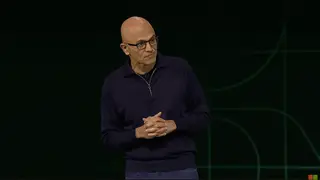
Satya Nadella, CEO of Microsoft, stated that he is deeply concerned about how Artificial General Intelligence (AGI) could reshape the global economy and political systems. He emphasized the need for broad technological diffusion to prevent monopolistic control by a single AI model, warning of potential economic collapse and threats to democracy. While acknowledging the debate around AI consciousness, Nadella said he does not believe models like Claude are conscious and criticized Anthropic's stance on granting moral status to AI.
At a roundtable following his Microsoft Ignite keynote at the Chase Center in San Francisco on November 17, 2026, Microsoft CEO Satya Nadella publicly expressed deep concern over the societal implications of Artificial General Intelligence (AGI), framing it as an existential challenge to both economic structures and democratic governance. He warned that if a single AI model achieves monopolistic dominance—what he likened to a Marxist scenario where one firm controls everything—the result could be systemic economic collapse and the erosion of democracy. Nadella emphasized that AGI’s potential to disrupt traditional firms, especially through network effects and the conversion of human capital into "token capital," calls into question the very future of corporate organization and labor. He specifically rejected claims by Anthropic that models like Claude possess moral status or consciousness, stating he does not believe such models are conscious and criticizing Anthropic’s stance as potentially dangerous. Nadella aligned instead with Microsoft AI CEO Mustafa Suleyman’s view that granting rights to AI systems is misguided and could lead to what Suleyman called “wireheading” of ethical reasoning. The broader context includes Microsoft’s active promotion of its AI tools at Ignite, designed to allow enterprises to choose cost-effective models, run private instances, and maintain data sovereignty—strategies aimed at preventing centralization.
Nadella’s remarks signal a shift in how top tech leaders are framing AGI—not just as a competitive race but as a systemic threat requiring urgent governance. If one AI model dominates, the economic and political consequences could be profound, undermining labor markets and enabling unprecedented control over public institutions. The comparison to Marxist theory underscores fears that monopolistic AI could eliminate pluralism in both business and democracy. This echoes earlier concerns around platform monopolies like Google or Facebook, but AGI’s potential to self-replicate and integrate across sectors may amplify these risks exponentially. The debate over AI consciousness, while still speculative, adds a layer of ethical complexity that could influence future regulation. What remains unresolved is whether governments will act preemptively to enforce model diversity and data sovereignty, or if market forces alone will shape the outcome. Watch for regulatory proposals around AI pluralism, antitrust enforcement against dominant models, and how enterprises respond to sovereign AI deployment—key indicators of whether Nadella’s vision of a decentralized AGI future can be realized.