Pentagon Targets Red Mud Waste to Secure Domestic Gallium Supply
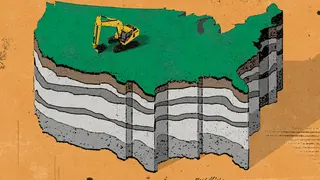
Researchers at Louisiana State University have identified significant amounts of recoverable gallium in red mud, a toxic industrial byproduct from aluminum production in Louisiana. With China controlling nearly 99% of global gallium output, the U.S. military is investing in methods to extract this critical mineral from waste sites to reduce strategic dependence. The effort aims to bolster domestic supply chains for essential defense technologies like radar and missile guidance systems.
In November 2026, researchers at Louisiana State University (LSU), led by geologist Amitava Roy, revealed that red mud—a toxic byproduct of aluminum production—contains significant amounts of recoverable gallium, a critical mineral essential for U.S. defense technologies like radar and missile guidance systems. The discovery stems from X-ray analysis conducted at LSU’s synchrotron facility on samples from the Atlantic Alumina refinery in Gramercy, Louisiana, which has accumulated over 30 million tons of red mud. Gallium is currently produced almost exclusively in China, which controls nearly 99% of global output; the U.S. has not manufactured it domestically since the 1980s and maintains no strategic stockpile. This vulnerability became acute after China imposed export restrictions on gallium in December 2024, effectively banning sales to the U.S., though a temporary truce suspended the ban through January 2027. The Pentagon has responded with significant funding: $30 million to ElementUSA for a demonstration plant to extract gallium and scandium from red mud, and $400 million to Atlantic Alumina to capture gallium during production before it becomes waste. The refinery aims to produce 50 tons annually—more than double U.S. consumption—by year-end 2026. Roy is pursuing a separate Department of Energy grant to advance extraction science, while the DOE has already funded five other gallium recovery projects, including one at the Gramercy site. What remains unclear is whether the federal government will scale up these efforts beyond demonstration, or if private companies like ElementUSA can achieve cost-effective, large-scale recovery without environmental trade-offs.
This effort could reshape U.S. supply chain resilience in defense and high-tech manufacturing by turning industrial waste into a strategic asset. If successful, it may reduce reliance on foreign sources of critical minerals, especially amid ongoing geopolitical tensions over resource access. The broader impact may extend to other nations seeking to diversify their mineral supply chains, potentially inspiring similar waste-to-resource initiatives globally. A comparable precedent is the U.S. shift toward domestic rare earth element processing after China’s 2010 export controls, which led to new mining and refining projects in the U.S. and allied countries. However, unlike rare earths, gallium extraction from red mud presents unique challenges: the chemical form of gallium in waste must be precisely understood to design efficient recovery methods, as emphasized by Roy’s synchrotron research. The environmental risks of handling caustic red mud—already a legacy pollution problem—could complicate scaling efforts, especially if new processing facilities increase local ecological strain. What remains uncertain is whether the U.S. will prioritize long-term sustainability over speed in deploying these technologies. Watch for regulatory and environmental reviews of proposed extraction plants, as well as shifts in international trade dynamics if China responds with further restrictions or retaliatory measures.