Nvidia Leverages Light-Based Chips to Overcome AI Data Bottlenecks
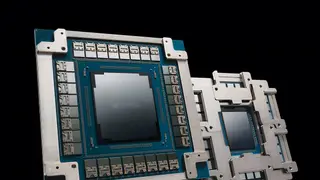
Nvidia is advancing silicon photonics technology to integrate optical communication directly with AI chips, aiming to solve critical data transfer limitations in large-scale neural networks. By embedding light-based switches near processing units, the company seeks to dramatically increase speed and efficiency in AI computing infrastructure. This move reinforces Nvidia's dominance in the AI hardware market amid growing demand for faster, more scalable systems.
In November 2026, Nvidia unveiled a breakthrough in AI hardware infrastructure by integrating silicon photonics directly into its data center networking systems through co-packaged optics. This innovation, demonstrated at a secret engineering lab near Santa Clara, California, involves embedding optical transceivers—devices that convert electrical signals to light and back—within the same package as AI chips like the Quantum-X and Spectrum-X switch-chip modules. The goal is to overcome the longstanding bottleneck of data transfer between thousands of GPUs in large-scale neural networks, where copper-based connections struggle with signal degradation, power consumption, and bandwidth limits over longer distances. While Nvidia already dominates the AI chip market with around 85% share, this move extends its control beyond computation into the critical domain of interconnectivity. The company’s shift toward optical communication—leveraging photons instead of electrons for data transfer—could dramatically increase speed and efficiency in AI training systems, which rely on massive parallel processing across distributed hardware. This development follows years of incremental improvements in GPU design and data center architecture, but marks a strategic pivot toward full-stack dominance. Key figures include Gilad Shainer, Nvidia’s senior vice president of networking, who champions the use of optics where copper fails, and researchers like Sudip Shekhar from the University of British Columbia, whose work underscores the need for scalable interconnects in modern AI systems. What remains unresolved is whether this technology will be adopted widely beyond Nvidia’s ecosystem, or if competitors will develop alternative solutions that could challenge its control over both compute and communication layers.
Nvidia’s integration of light-based chips may accelerate the pace of AI development by removing a major technical constraint—data movement—potentially enabling faster training of larger models. This could benefit researchers, pharmaceutical companies using AI for drug discovery, and cloud providers seeking to offer more powerful services. However, it also raises concerns about vendor lock-in, as tighter integration between chips and optical interconnects may make it harder for other hardware makers to compete or innovate independently. The shift mirrors the earlier dominance of Intel in x86 processors, where control over both silicon and system architecture created long-term market advantages. If Nvidia’s optics become the de facto standard, it could reshape data center design, influence software optimization strategies, and affect investment patterns in AI infrastructure. The broader impact may extend to global tech supply chains, as reliance on specialized optical components could concentrate manufacturing power. What to watch for includes whether open standards emerge to counterbalance this trend, how quickly competitors like AMD or custom silicon startups respond, and whether regulatory scrutiny increases as the company’s influence grows—especially following CEO Jensen Huang’s resignation in November 2026, which may signal internal shifts affecting long-term strategy.