Sea Lions and Cockatoos Offer Clues to the Evolutionary Roots of Rhythmic Perception
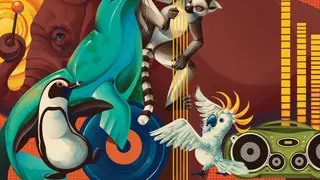
California sea lion Ronan demonstrates exceptional beat-matching abilities, swaying in time to music like Earth, Wind & Fire’s 'Boogie Wonderland' with precision surpassing many humans. Her skills, studied by comparative neuroscientist Peter Cook, suggest that rhythm perception may have deeper evolutionary roots than previously thought. Other animals, including cockatoos, also contribute insights into how musicality might have developed across species.
In November 2026, California sea lion Ronan, housed at the University of California, Santa Cruz’s Long Marine Laboratory, demonstrated precise beat-matching abilities to Earth, Wind & Fire’s “Boogie Wonderland,” swaying her head in perfect synchronization with the music. Her performance, studied by comparative neuroscientist Peter Cook of New College of Florida, surpassed that of most humans tested under similar conditions, with Cook noting she outperformed nearly all adult human participants across multiple metrics. Ronan’s skill is part of a broader scientific effort to understand the evolutionary roots of musicality—specifically rhythm perception—by examining non-human animals. Other species, including cockatoos and chimps, have also shown rhythmic abilities, with some researchers exploring vocal mimicry in sand gobies and coordinated movements in primates. These studies aim to determine whether music-related skills are innate biological adaptations or purely cultural constructs. The research builds on earlier work, such as Henkjan Honing’s 2009 findings that newborns detect missing beats in rhythmic patterns, suggesting an innate sensitivity to rhythm. However, the field remains cautious due to historical biases favoring Western musical traditions and skepticism about universal musical traits. Despite progress, it remains unclear whether rhythm perception evolved independently in different species or is a shared trait with deep evolutionary origins.
Ronan’s beat-matching abilities may influence how society views animal cognition and the biological underpinnings of music, potentially reshaping public understanding of intelligence beyond humans. If rhythmic perception proves to be an evolutionarily conserved trait, it could challenge long-held assumptions that music is uniquely human or purely cultural. This shift might affect education, where music programs could incorporate insights from animal studies to enhance learning theories. In entertainment and technology, the findings may inspire new forms of interactive media—such as Cook’s envisioned “Guitar Hero for sea lions”—that blend animal behavior with digital interfaces. A comparable precedent is the 2014 case of Alex the parrot, whose linguistic abilities reshaped perceptions of avian intelligence. While Ronan’s case does not yet suggest language, it may similarly expand the boundaries of what animals can do cognitively. The broader impact could be a growing interdisciplinary movement linking neuroscience, ethology, and music cognition. What remains uncertain is whether such abilities are widespread across species or rare anomalies, and how much they reflect shared evolutionary mechanisms versus convergent adaptations. Researchers may soon explore more species, develop standardized tests, or even use AI to analyze animal responses—could this lead to new ethical considerations in animal research?