A Poetic Reflection on Forgotten Scientific Concepts and the Enduring Mystery of the Unknown
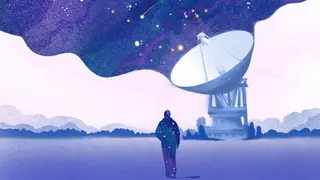
The poem explores obsolete scientific ideas like phlogiston, ether, and 'mysterium,' reimagining them not as discarded errors but as metaphors for unresolved questions in science. It suggests that even in a world of advanced machines and knowledge, some mysteries—symbolized by 'x'—will always remain beyond explanation. The piece blends scientific history with lyrical meditation on doubt and the limits of human understanding.
On November 17, 2026, Scientific American published a poem titled “LET x BE” by Carol Hart, edited by Dava Sobel and Clara Moskowitz, in its December/January 2027 issue (Vol. 335 No. 5, p. 89). The piece reimagines obsolete scientific concepts—phlogiston, ether, and mysterium—not as failed theories but as poetic metaphors for enduring epistemic uncertainty. Phlogiston was historically believed to be the substance released during combustion; ether was once thought to permeate space as a medium for light propagation; mysterium referred to unexplained spectral lines in early 20th-century physics, later identified as ionized helium. Though discarded by modern science, Hart repurposes these terms as symbols of unresolved questions and the persistent "x" that remains beyond explanation. The poem reflects on how scientific progress often involves discarding ideas, yet some mysteries may persist even with advanced AI and computational tools. The article was published under the banner of Scientific American, a long-standing publication known for rigorous science communication, and is part of its ongoing effort to blend literary expression with scientific reflection.
The poem could influence how public audiences perceive scientific uncertainty, framing it not as failure but as a necessary condition of inquiry. By personifying outdated concepts as poetic relics, Hart may help demystify the scientific process for non-specialists, emphasizing that doubt and unanswered questions are integral to discovery. This approach may resonate with readers disillusioned by oversimplified science reporting or the "final answer" narrative often seen in popular media. A comparable precedent is Carl Sagan’s use of metaphor in Cosmos, where he wove wonder into scientific exposition. If widely shared, such poetic reframing might encourage greater public tolerance for ambiguity in fields like AI ethics, climate modeling, or quantum physics—areas where definitive answers remain elusive. The impact may ripple into education and science communication strategies, where institutions could adopt literary tools to convey complexity without oversimplification. What to watch for: whether similar interdisciplinary works gain traction in mainstream science media, potentially reshaping how science is taught and discussed in digital spaces.