Leonid Meteor Shower Reaches Peak with Fireballs and Fast-Streaking Meteors
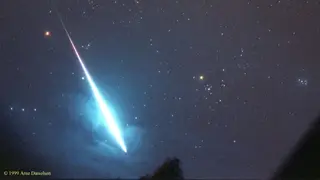
The Leonid meteor shower, originating from debris left by Comet 55P/Tempel-Tuttle, will peak on the night of November 16, 2026, producing bright fireballs and colorful meteors visible at speeds up to 44 miles per second. Although only about three meteors per hour are expected in dark locations, the shower is notable for its Earth-grazing meteors and occasional meteor storms, which occur roughly every 33 years when the comet releases large amounts of debris. Skywatchers are advised to view from a dark area with minimal light pollution, lying down facing east after allowing their eyes to adjust for about 30 minutes.
On the night of November 16, 2026, the Leonid meteor shower reached its peak, producing bright fireballs and fast-moving meteors visible across the Northern Hemisphere, particularly in regions with minimal light pollution such as the East Coast of the United States. The meteors, traveling at speeds up to 44 miles per second, originated from debris left by Comet 55P/Tempel-Tuttle, which orbits the Sun every 33 years. Although only about three meteors per hour were expected in dark skies, the event was notable for its Earth-grazing trajectories and occasional fireballs—large, luminous fragments of comet material that burn brightly and persist longer than typical meteors. The peak occurred between midnight and dawn, with visibility slightly reduced by a nearly half-full moon. NASA advised observers to lie down facing east, allow their eyes 30 minutes to adjust to the dark, and dress warmly for extended outdoor viewing.
The Leonids are historically significant due to their potential to produce meteor storms—events where over 1,000 meteors per hour streak across the sky—occurring roughly every 33 years when the comet releases dense debris streams. The last such storm was recorded in 2002, and while no storm is expected in 2026, the shower remains a highlight for amateur astronomers and stargazers. Scientific American’s coverage, authored by Mary Randolph and edited by Claire Cameron, emphasized the educational and observational value of the event, linking it to broader public interest in celestial phenomena. The article also highlighted the role of independent science journalism in maintaining public engagement with space science, underscoring the importance of subscriptions in sustaining high-quality reporting.
The 2026 Leonid meteor shower may inspire renewed public interest in astronomy and dark-sky conservation, particularly among younger audiences drawn to celestial events through social media and science communication platforms. While the event itself is brief and localized, its coverage by outlets like Scientific American could amplify awareness of space science and encourage participation in citizen science projects related to meteor observation. The emphasis on viewing conditions—such as darkness, orientation, and eye adaptation—may also prompt greater public understanding of observational limitations and the need for accessible, low-light environments. Comparable to past media-driven astronomical events such as the 2017 solar eclipse, this shower could see a surge in outdoor gatherings, stargazing apps, and educational programming. Institutions like NASA may leverage the moment to promote STEM engagement, while science journalism platforms could use it to demonstrate the value of sustained reporting on natural phenomena. What remains uncertain is whether such events will translate into long-term shifts in public support for space research or environmental policies aimed at reducing light pollution. The next major Leonid storm, expected around 2059, may offer a clearer test of whether this year’s visibility and coverage have lasting societal impact.