Amazon Rainforest Faces Critical Threshold Amid Record El Niño and Escalating Fires
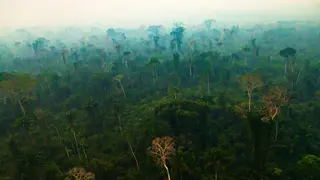
The Amazon rainforest is under severe threat as the strongest El Niño on record triggers extreme drought and widespread fires, particularly in Brazil's Amazonas state, where fire hotspots surged 160% compared to last year. Scientists warn that decades of deforestation, global warming, and prior damage from 2023–2024 El Niño events have weakened the ecosystem, pushing it toward a potential tipping point where drying, tree death, and wildfires could spread uncontrollably. Researchers including ecologist Bernardo Flores caution that without intervention, the Amazon could irreversibly transition into savanna-like ecosystems within decades.
In October 2026, Brazil’s Amazonas state recorded 2,271 fire hotspots—160% more than in the same month of the previous year—amid a record-strength El Niño event now considered the largest in living memory. The smoke from these fires blanketed Manaus, causing air quality to reach nearly 30 times the World Health Organization’s safe limit on October 17, prompting schools and universities to suspend in-person instruction and civil defense agencies to recommend N95 masks. This surge follows a pattern of escalating stress: the Amazon is still recovering from the 2023–2024 El Niño, which caused historic river lows and burned over 15.8 million hectares—larger than England—of forest, with projections indicating more than half may not recover within seven years. Decades of deforestation, now at roughly 17% of the total rainforest since the 1970s, combined with global warming nearing 1.5°C above preindustrial levels, have weakened the ecosystem’s resilience. Ecologist Bernardo Flores and modeler Nico Wunderling highlight that deforestation reduces the temperature threshold at which a tipping point could occur; under current conditions, just 22–28% deforestation could make collapse possible at only 1.5–1.9°C of warming. The forest’s self-sustaining moisture recycling system is now under strain, with models suggesting that even modest additional warming or forest loss could trigger irreversible drying and fire spread. While President Luiz Inácio Lula da Silva’s re-election in 2023 led to a halving of deforestation rates since 2022, fire activity has not declined proportionally, raising doubts about whether current policies are sufficient. The next critical phase will depend on whether climate feedbacks accelerate beyond control before mitigation efforts can scale.
The Amazon’s deteriorating condition could have cascading effects on global climate systems, altering rainfall patterns across South America and beyond, potentially disrupting agriculture in key food-producing regions like the U.S. Midwest and parts of Africa. The risk of a biome shift from rainforest to savanna may release billions of tons of stored carbon, accelerating warming and undermining international climate goals. While Brazil’s recent policy reversal offers cautious hope, the disconnect between reduced deforestation and persistent fires suggests enforcement gaps or legacy burn impacts. This situation echoes the 2019 Amazon fire crisis, when global attention surged but long-term recovery lagged. What may unfold now is a more insidious, systemic failure—where ecological thresholds are crossed without dramatic headlines. The next few years will be crucial: if climate models and satellite monitoring detect accelerating dieback or moisture loss, international pressure on Brazil and commodity markets (especially beef and soy) could intensify. However, the outcome remains uncertain; whether political will can match scientific urgency, or whether feedback loops will outpace intervention, is not yet known.