Mental Imagery Differences May Shape How People Make Choices
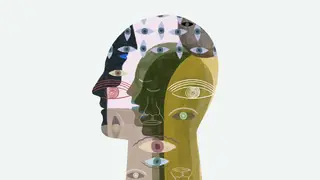
Individuals vary widely in their capacity to visualize mental images, ranging from aphantasia—complete inability to form mental pictures—to hyperphantasia, where imagery is exceptionally vivid. Research by Joel Pearson at the University of New South Wales links this variation to differences in the visual cortex and cortical excitability, with brain stimulation experiments showing that imagery strength can be modulated. These cognitive differences may influence decision-making processes by affecting how people mentally simulate outcomes.
In November 2026, researchers led by Joel Pearson at the University of New South Wales published findings linking individual differences in mental imagery—ranging from aphantasia (inability to visualize) to hyperphantasia (extremely vivid imagery)—to variations in visual cortex structure and cortical excitability. Their work, building on earlier studies such as Francis Galton’s 1880s survey of mental imagery, used neurostimulation techniques like transcranial electrical stimulation to demonstrate that modulating the visual cortex could alter a person’s ability to form mental images. This suggests a causal role for brain responsiveness in visualization capacity. The study also employed advanced methods like binocular rivalry tests and physiological measures—such as pupil dilation and skin conductance—to assess imagery strength, with results showing that vivid mental imagery amplifies emotional responses, as if the brain were tricked into perceiving imagined events as real. While aphantasia has been documented for over a century and may have genetic components, the underlying neural mechanisms remain unclear, particularly whether those without imagery are unaware of it or simply lack it entirely. Hyperphantasia remains poorly studied due to difficulties in identifying and recruiting individuals with such extreme visualization abilities. The research raises questions about how these cognitive differences might influence decision-making, especially in contexts requiring mental simulation of outcomes.
The discovery that mental imagery varies widely across individuals could reshape understanding of cognitive diversity in fields like education, psychology, and artificial intelligence design. People with strong mental imagery may be more influenced by imagined scenarios when making decisions—potentially leading to stronger emotional reactions or biases based on vivid internal simulations—while those with aphantasia might rely more on abstract reasoning or verbal processing. This could affect performance in creative professions, risk assessment, or even legal testimony, where memory and visualization play key roles. A comparable precedent is the growing recognition of neurodiversity in learning styles, such as visual vs. auditory learners, which has already prompted changes in teaching methods. If mental imagery proves to be a significant cognitive variable, institutions may need to adapt training and communication strategies accordingly. Future research could explore whether AI systems trained on human brain activity patterns (via fMRI decoding) might one day simulate or predict individual differences in imagination, potentially leading to personalized cognitive tools. However, it remains unknown how stable these traits are over time, whether they can be trained, or how deeply they affect long-term behavior—questions that will likely shape the next phase of inquiry.