AGIBOT G2 Robots Demonstrate Embodied AI in Real-World Retail Environment
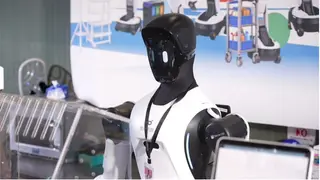
Six AGIBOT G2 wheeled humanoid robots completed 1,730 tasks over a 24-hour period at a live convenience store in Shanghai’s Xuhui District, handling customer service, coffee preparation, shelf restocking, and cleaning. The trial tested their performance across four busy operational phases—lunchtime rush, evening peak, overnight shift, and morning breakfast rush—evaluating task completion, response times, and adaptability to unexpected situations. Four of the six robots passed a final assessment, demonstrating the viability of embodied AI in dynamic, customer-facing retail settings.
From November 2 to November 3, 2026, six AGIBOT G2 wheeled humanoid robots operated continuously for 24 hours at a live convenience store in Shanghai’s Xuhui District, completing 1,730 tasks across customer service, coffee preparation, shelf restocking, cleaning, and checkout duties. The trial, part of the AGIBOT AI WAVE technology showcase launched on October 22, tested performance during four high-demand operational phases: lunchtime rush, evening peak, overnight shift, and morning breakfast rush. Four of the six robots passed a final assessment based on task completion, response times, adaptability to unexpected situations, and customer feedback. Specific challenges included distinguishing between similar products like sugar-free and regular Coca-Cola, restoring rearranged chewing gum packs to correct positions, and navigating blocked aisles. The robots used real-time visual data to detect misplaced items, replenish shelves autonomously, and adjust cleaning methods based on spill detection—demonstrating embodied AI’s ability to handle dynamic, unstructured environments. AGIBOT’s Genie Master framework coordinated actions through the Embodied Execution Protocol (EEP), enabling robots to learn from past successes and failures by storing effective adjustments in long-term memory and refining future action policies.
The trial marked a significant step beyond controlled lab demonstrations, showcasing how embodied AI can function in real retail settings with human interaction. AGIBOT, the developer of the G2 robots and Genie Master system, aims to commercialize this technology for widespread deployment in service industries. The company’s broader strategy involves integrating hardware, AI models, simulation data, and operational software into a cohesive ecosystem. While two robots failed to meet all performance criteria, the success of four demonstrates viability in complex, changing environments. What remains unresolved is whether such systems can scale reliably across different store layouts, maintain consistent performance over longer durations, or adapt to cultural or regional variations in customer behavior. The next phase likely involves refining error correction mechanisms and expanding deployment beyond convenience stores into other retail or hospitality sectors.
This trial could signal a shift toward more autonomous, adaptive service robots in everyday commercial spaces, potentially reshaping labor dynamics in retail and food service. If proven scalable, such systems may reduce staffing needs for routine tasks while improving consistency and hygiene—particularly beneficial in high-turnover environments like convenience stores. However, widespread adoption may face hurdles related to cost, maintenance, public trust, and regulatory oversight. The success of AGIBOT’s Genie Master framework—especially its ability to learn from experience—mirrors earlier milestones in AI development, such as DeepMind’s AlphaGo learning through self-play, but applied to physical, real-time environments. Unlike static automation, this approach suggests a future where robots evolve their behavior based on lived operational data. The broader impact may extend to how companies design store layouts, train human employees, and manage customer expectations. What to watch for next is whether similar trials in other cities or industries will replicate these results, and how quickly investors and regulators respond to the growing presence of embodied AI in public spaces.