DeepMind Releases Foundational Weather Datasets for Public Use
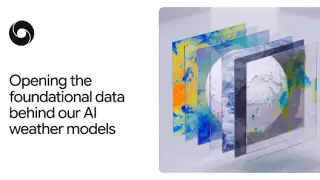
Google DeepMind has made available key precipitation and geostationary satellite datasets used in its AI weather modeling research. These datasets provide detailed observations of Earth's atmospheric conditions, enabling broader scientific analysis and model development. The move supports transparency and collaboration in climate and weather prediction research.
Google DeepMind has released foundational datasets related to precipitation and geostationary satellite observations for public access. These resources, developed during DeepMind’s research into AI-driven weather modeling, contain detailed records of Earth’s atmospheric conditions. The release marks a significant step toward open science in meteorology, offering researchers worldwide free access to high-resolution observational data that previously may have been restricted or proprietary. While specific details such as release dates, file formats, or geographic coverage are not provided, the datasets are explicitly tied to DeepMind’s AI weather research efforts and are intended to support broader scientific analysis and model development.
This action follows growing calls within the climate science community for greater transparency in data sharing, particularly for models that inform critical predictions about extreme weather events. DeepMind’s move aligns with a broader trend of tech-driven organizations contributing to public good through open data initiatives. The company, part of Alphabet Inc., appears to be positioning itself as a leader in responsible AI research by enabling independent validation and innovation. Other institutions, including academic meteorological groups and climate research consortia, may now leverage these datasets to improve forecasting accuracy or develop new predictive tools.
The implications for future collaboration are substantial, though the long-term impact depends on how widely the data is adopted and integrated into existing modeling frameworks. It remains unclear whether DeepMind will continue to expand its open data offerings or if other tech firms will follow suit. What is not yet known includes the extent of data curation, metadata availability, or potential licensing restrictions that might affect usage.
The release could empower researchers in developing nations and smaller institutions with limited access to proprietary weather data, potentially leveling the playing field in climate resilience planning. Scientists working on flood prediction, agriculture forecasting, or disaster preparedness may benefit from improved model training and validation tools. This move may also encourage other AI labs and tech companies to reconsider data access policies, especially in domains where public safety is at stake. A comparable precedent is the release of satellite data by NASA and the European Space Agency, which catalyzed decades of innovation in remote sensing and climate science. While DeepMind’s contribution is more focused on AI applications than raw observation, its impact could be similarly transformative if widely adopted. The broader institutional ecosystem—academic journals, funding bodies, and international climate agreements—may begin to prioritize open data as a standard for research credibility. What to watch for includes whether the datasets are used in operational forecasting systems or incorporated into public weather services. The long-term success of this initiative may depend on sustained engagement from the scientific community and the development of tools to make the data accessible and usable across diverse technical skill levels.