Heel-First Walking Is a Unique Human Trait with Evolutionary Trade-offs
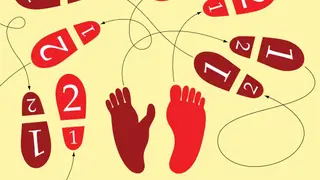
Human walking is distinguished by consistent heel-first contact with the ground, a pattern not observed in any other bipedal species, including chimpanzees, bonobos, and orangutans. Researchers found that while heel-first walking increases impact forces on joints, it reduces energy expenditure by 26 to 41 percent compared to midfoot striking. The study, led by anthropologist Nicholas Holowka from Pennsylvania State University and the University of Buffalo, was published in the Proceedings of the National Academy of Sciences USA.
Researchers led by anthropologist Nicholas Holowka from Pennsylvania State University and the University of Buffalo have identified heel-first walking as a uniquely human trait, distinguishing us from other bipedal primates including chimpanzees, bonobos, and orangutans. High-speed video analysis of three chimps walking upright revealed consistent midfoot strikes, while nine human participants demonstrated uniform heel-first contact. This gait pattern, observed across all tested humans but not in any other known biped, comes with a trade-off: it generates higher impact forces on joints compared to midfoot striking. However, the energy savings are substantial—26 to 41 percent less energy expenditure during walking when using a heel-first stride. The study, published in the Proceedings of the National Academy of Sciences USA, draws on fossil evidence showing the evolution of wider heel bones and robust lower-limb joints beginning around three to four million years ago, with consistent heel-strike adaptations emerging by two million years ago. This coincides with the rise of long-distance foraging and hunting among early hominins, suggesting that energy efficiency was a key driver in the evolution of this gait. The human heel bone is described as the largest and most distinctive in the foot, reflecting its critical role in bipedal locomotion.
The findings build on prior knowledge of primate locomotion but highlight a divergence in how humans prioritize biomechanical efficiency over joint protection. While running typically avoids heel strikes due to higher knee loading—up to three times greater than walking—walking evolved to favor energy conservation despite increased impact. Experts like Neelima Sharma from University College London note this contrast, underscoring the adaptability of human movement strategies. The research team’s analysis of fossil records links anatomical changes in the foot and lower limb to the emergence of heel-first walking, suggesting a suite of evolutionary adaptations including longer legs and modern pelvic structure. What remains unresolved is whether this gait pattern correlates with specific cognitive or social developments, or if it influenced tool use and endurance hunting beyond energy savings. Future studies may explore how variations in heel strike affect injury rates in modern populations or inform prosthetic design.
The discovery that heel-first walking is a uniquely human evolutionary adaptation could influence fields ranging from orthopedics to biomechanical engineering. By highlighting the trade-off between joint stress and energy efficiency, the study may prompt re-evaluations of gait training programs for athletes, rehabilitation patients, and individuals with mobility impairments. Footwear manufacturers might use this insight to design more biomechanically aligned shoes that support natural walking patterns while minimizing long-term joint damage. In broader society, understanding human locomotion’s evolutionary roots could enhance public awareness of how our bodies are adapted for endurance rather than speed or agility, potentially reshaping fitness culture and physical education curricula. A comparable precedent is the 1970s research on barefoot running, which sparked widespread debate about optimal foot strike patterns and led to a surge in minimalist footwear markets. Similarly, this study may catalyze interest in gait analysis tools and personalized movement coaching. However, it remains unclear whether modern lifestyles—sedentary behavior, urban environments—have altered the relevance of this ancient adaptation. The next phase may involve longitudinal studies on how heel strike patterns correlate with osteoarthritis or injury risk across diverse populations, particularly as wearable tech enables real-time gait monitoring.