How Network Science Is Revealing Hidden Connections in Biology and Diet
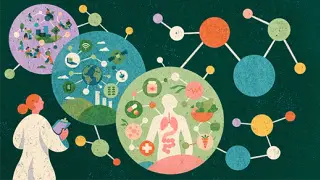
Albert-László Barabási explores how network science—originally developed to understand systems like the internet—can map biological interactions within the human body, revealing clusters of disease-related genes and potential drug targets. His Foodome project identifies around 135,000 understudied food compounds he calls the 'dark matter of nutrition,' whose roles in cellular function are only beginning to be understood. This approach could revolutionize how we treat disease and design diets based on molecular interactions rather than traditional nutritional categories.
In November 2026, Albert-László Barabási, a network scientist affiliated with Northeastern University, Harvard Medical School, and Central European University, introduced his Foodome project during an episode of Quanta Magazine’s podcast *The Joy of Why*. The initiative identifies approximately 135,000 understudied food compounds—what Barabási terms the “dark matter of nutrition”—that fall outside traditional nutritional categories like macronutrients and vitamins. These molecules, largely unexplored in terms of their biological roles, are now being mapped through network science principles originally developed to understand systems such as the internet and social networks. Barabási’s work builds on decades of research into network architecture, particularly the discovery that real-world networks—ranging from gene interactions to social ties—exhibit common structural features like hubs and clustering. His earlier findings revealed that disease-related genes tend to cluster in specific “network neighborhoods,” suggesting that targeting these dense regions could lead to more effective drug development. This insight directly informed his pivot toward nutrition, where he argues that understanding molecular interactions within the human body—rather than relying on conventional dietary categories—could revolutionize both preventive medicine and personalized nutrition.
The project’s foundation lies in applying network theory to biological systems, a field Barabási helped pioneer. His collaboration with Steven Strogatz, a noted mathematician, reflects a broader scientific movement that views complex systems through the lens of connectivity rather than isolated components. While the Foodome project has cataloged thousands of compounds, their precise functions within cellular processes remain largely unknown. The next steps—such as identifying which compounds influence health outcomes, how they interact with genes and proteins, and whether they can be leveraged for therapeutic or dietary interventions—are still uncharted. What remains unresolved is not just the science but also how this knowledge will be translated into public health policy, clinical practice, or commercial food products.
Barabási’s work could reshape how society approaches diet and disease prevention by shifting focus from broad nutritional categories to molecular-level interactions. If validated, this network-based model may enable personalized dietary recommendations based on an individual’s genetic and metabolic profile, potentially reducing chronic disease risk. The implications extend beyond health: food companies and supplement manufacturers may seek to develop products centered on previously overlooked compounds, possibly creating new markets for "network-optimized" nutrition. Similarly, pharmaceutical firms could use network maps to identify novel drug targets, particularly in complex diseases like cancer or neurodegenerative disorders where traditional approaches have struggled. A comparable precedent is the Human Genome Project, which, though initially met with skepticism, eventually transformed medicine by enabling targeted therapies. However, unlike genomics, which produced immediate diagnostic tools, network science in nutrition remains in early discovery—its real-world impact depends on whether these 135,000 compounds can be experimentally validated and integrated into clinical frameworks. What to watch for next is not just scientific validation but also regulatory and ethical questions around data privacy, commercialization of biological insights, and equitable access to emerging nutritional technologies.