Google Researcher's AI Claims to Find Lost Maya Site, But It Was Already Known
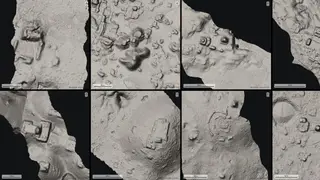
Google researcher Pietro Miotti used a team of 48 AI agents to analyze NASA lidar data in search of undiscovered Maya archaeological sites in Mexico. The AI flagged potential structures, but the site identified had already been documented and published in an academic journal the previous year. The incident has sparked criticism from archaeologists concerned about amateur use of AI tools in specialized scientific fields.
In November 2026, Google researcher Pietro Miotti claimed to have used a team of 48 AI agents to identify a previously unknown Maya archaeological site in Mexico by analyzing NASA lidar data. The AI flagged a major village-like structure not registered in official databases, prompting Miotti to contact Mexico’s National Institute of Anthropology and History (INAH), which confirmed no formal record existed at that location. Miotti, who described the project as a personal, non-employer-sponsored endeavor conducted without Google’s resources, celebrated the speed of discovery—reporting an official response in under 72 hours—and hailed it as evidence of AI’s transformative potential across science. However, archaeologists quickly pointed out that the site had already been documented and published in an academic journal more than a year earlier, rendering the claim of “discovery” inaccurate. The incident highlights a growing tension between amateur use of advanced AI tools and established scientific practices, particularly in fields like archaeology where expertise, context, and peer-reviewed validation are essential. Miotti acknowledged his lack of archaeological training and admitted that AI agents failed to cross-reference findings with published research—especially visual data from academic papers—because such comparisons require human interpretation beyond database searches.
The incident underscores a broader societal concern about the democratization of powerful AI tools in specialized domains. While AI can accelerate data analysis, its use by non-experts may lead to misrepresentation, misinformation, and erasure of prior scholarly work—especially when findings are publicized without proper verification. This case mirrors earlier controversies involving satellite imagery and amateur archaeology, such as the 2018 “discovery” of lost cities in Peru by non-specialists using Google Earth, which similarly sparked backlash from experts. The real impact may be on public trust in science: when AI-driven claims go viral without scrutiny, they risk undermining the credibility of both technology and established researchers. Institutions like INAH and academic journals may face increased pressure to verify or respond to such claims, potentially diverting resources from actual fieldwork. Moving forward, the key challenge will be developing AI systems that can effectively integrate with peer-reviewed literature and respect the nuanced knowledge of domain experts—something that could shape how institutions regulate or guide public use of AI in science.