Gemini 4 Hydrogen Launches Globally in Google Search for Smarter, Visual Answers
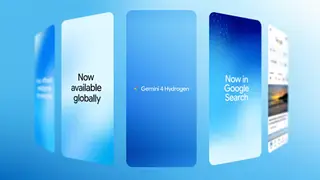
Google has rolled out Gemini 4 Hydrogen to all users worldwide, enhancing Search with improved intent understanding and more visual, structured responses. The update enables users to ask complex, multi-part questions in natural language and receive precise answers with tables, images, and relevant links. It supports all languages currently covered by Google’s AI models and aims to streamline tasks like travel planning, shopping, and hobby research.
On November 12, 2026, Google rolled out Gemini 4 Hydrogen globally across all users of Google Search, marking the most significant model upgrade to the search engine’s AI capabilities to date. This update enhances the system’s ability to interpret complex, multi-part questions in natural language, delivering precise answers through visual formats such as tables, images, and custom tools. The feature supports all languages currently covered by Google’s AI models and is designed to improve user experience across tasks like travel planning, shopping, and hobby research. Key technical advances include better intent understanding, improved query fan-out (simultaneous subtopic exploration), and deeper reasoning that enables more accurate tool calling and link relevance. These capabilities are now available in real time, with no need for users to adjust their search behavior.
The rollout follows years of incremental AI integration into Google Search, beginning with early experiments in generative AI and evolving through successive Gemini model iterations. Prior updates focused on refining response accuracy and speed, but Gemini 4 Hydrogen represents a leap in structural intelligence—moving beyond simple keyword matching to contextual comprehension and multi-step reasoning. The project is led by Robby Stein, VP of Product at Google Search, who emphasizes the goal of making search more intuitive and less reliant on precise query formulation. Google’s broader AI strategy, including its investment in large-scale models and infrastructure, underpins this release. However, it remains unclear how the model’s performance varies across regions with limited internet access or lower computational capacity, nor is there data yet on long-term user engagement metrics post-launch.
Gemini 4 Hydrogen could significantly reshape how users interact with information, particularly by lowering the barrier to complex queries—potentially empowering non-experts in fields like travel planning or product comparison. The shift toward visual and structured responses may reduce reliance on sifting through multiple websites, possibly increasing user satisfaction while altering digital advertising dynamics, as attention shifts from traditional SERP listings to AI-generated summaries. This evolution mirrors the impact of Google’s 2013 Knowledge Graph rollout, which similarly redefined how answers were delivered. However, unlike that earlier change, this update introduces generative content with inherent risks: hallucination, bias amplification, or over-reliance on curated sources could distort user perception. Institutions like news outlets and e-commerce platforms may see diminished direct traffic as users derive answers within the search interface. What to watch for includes regulatory scrutiny around AI-generated content transparency, long-term user trust in automated summaries, and whether competitors can match this level of integration without similar infrastructure investments.