Jensen Huang's Departure from Nvidia Raises Concerns Over Talent Loss in AI Chip Industry
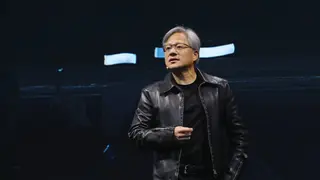
Jensen Huang, co-founder and former CEO of Nvidia, has resigned amid allegations of relationships with individuals linked to Chinese intelligence, prompting fears of a potential exodus of top talent from the company. His deep involvement in every aspect of Nvidia's operations since its 1993 founding has made him central to the firm’s innovation pipeline and its dominance in AI chip development. With his departure, experts warn that the loss of his leadership could disrupt the company’s momentum in advancing the semiconductor technology underpinning modern artificial intelligence.
On November 12, 2026, Jensen Huang, co-founder and former CEO of Nvidia, resigned from the company amid allegations involving relationships with individuals linked to Chinese intelligence, including a woman reportedly tied to Chinese state intelligence and another unnamed Nvidia executive. His departure follows extensive media scrutiny, notably by The New York Times, and comes at a pivotal moment for the AI industry, as Nvidia remains the dominant supplier of GPUs essential to training large-scale artificial intelligence models. Since founding the company in 1993, Huang has maintained an unusually hands-on role, overseeing nearly every strategic decision and maintaining deep involvement in chip design, innovation pipelines, and corporate culture. His leadership style—marked by direct oversight of over 60 executives—has been central to Nvidia’s technical momentum and its reputation as a leader in AI hardware. While the company named interim CFO Colette Kress as his replacement, analysts at Oppenheimer & Co warn that Huang’s absence presents a “material, potentially thesis-changing event,” with no clear successor identified. Experts like Ryan Fedasiuk of the Foundation for American Innovation emphasize that while Nvidia employs tens of thousands of top-tier engineers, the real risk lies not in technical capability but in organizational distraction and potential talent flight. Kristy Loke of the MATS Program notes Huang’s role as a public advocate for open AI models and balanced U.S.-China tech policy, suggesting his departure may affect the company’s geopolitical stance and industry influence. What remains unresolved is whether this scandal will trigger broader departures, how long the leadership transition will take, and whether Nvidia can maintain its innovation pace without such a central figure.
The resignation of Jensen Huang could have ripple effects beyond Nvidia, potentially influencing investor confidence in AI infrastructure companies and altering the dynamics of global semiconductor competition. As Nvidia’s GPUs power most major AI labs and startups, any disruption to its development pipeline may slow progress in AI research, particularly for smaller organizations reliant on its technology. The incident may also intensify geopolitical scrutiny of U.S. tech leaders with international ties, raising questions about how personal conduct intersects with national security in high-stakes industries. A comparable precedent is the 2018 case involving Huawei’s Meng Wanzhou, where a single executive’s legal entanglement triggered widespread market and policy shifts. While Huang’s departure may not immediately halt technological advancement—given Nvidia’s deep engineering talent—the distraction could delay breakthroughs in energy-efficient chip design and data movement, critical challenges for next-generation AI. What to watch for includes whether other top engineers follow Huang out of the company, how quickly a permanent CEO is appointed, and whether the U.S. government or competitors like AMD or Intel accelerate their own AI chip initiatives in response. The broader AI ecosystem may adapt, but the loss of a unifying figure could affect morale and collaboration across the industry.