Deep-Sea Nodules Host Surprising Diversity of Microscopic Life
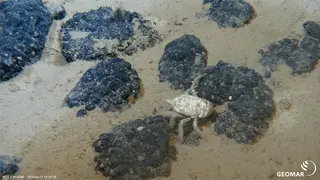
New research reveals that polymetallic nodules in the Clarion-Clipperton Fracture Zone host thousands of microscopic organisms, including roundworms, tiny crustaceans, and a prevalent single-celled protist named 'Thurammina sp. 1'. These nodules provide a distinct habitat different from surrounding deep-sea sediment, with communities on distant nodules more similar to each other than to nearby sediment-dwelling life. The findings highlight the ecological significance of these metal-rich formations and call for careful consideration in future deep-sea mining plans.
In November 2026, a study published in *Scientific Reports* revealed that polymetallic nodules in the Clarion-Clipperton Fracture Zone (CCZ) of the Pacific Ocean harbor thousands of microscopic organisms, including roundworms, tiny crustaceans, and a prevalent single-celled protist named *Thurammina sp. 1*. Researchers analyzed hundreds of nodules collected from this deep-sea region, finding that a single nodule could host up to hundreds of individual animals, with an average of 17 per nodule. These nodules provide a distinct ecological habitat different from surrounding sediment, and surprisingly, communities on nodules separated by 1,000 kilometers showed greater similarity than those in nearby seabed sediment. This suggests the nodules may be essential for sustaining certain species, including *Thurammina sp. 1*, which appears to depend on their unique structure. The discovery comes amid growing international interest in deep-sea mining for critical minerals like manganese and copper used in renewable energy technologies and electronics. While the U.S. under President Trump pursued expanded mining to reduce reliance on foreign imports, nations remain divided—Japan considers mining operations, France advocates a ban, and Pacific Island nations like Palau and Fiji have called for a moratorium. Meanwhile, companies such as Impossible Metals are developing AI-powered autonomous robots that claim to extract nodules with minimal environmental disruption. The study’s senior author, Sabine Gollner of NIOZ and the University of Groningen, warns that commercial mining could lead to irreversible loss of previously undescribed biodiversity tied specifically to nodules. What remains unresolved is whether regulatory frameworks can evolve quickly enough to incorporate these ecological findings into responsible mining policies.
The discovery underscores a growing tension between resource extraction and deep-sea conservation. As demand for battery metals rises, the economic incentives for deep-sea mining are strong, particularly for nations seeking strategic autonomy in supply chains. However, this research adds weight to concerns that mining could eliminate unique, poorly understood ecosystems before they are fully documented. The finding may influence international bodies like the International Seabed Authority (ISA), which oversees mineral rights beyond national waters, and could prompt stricter environmental impact assessments or even halt projects pending further study. A comparable precedent is the controversy over oil drilling in the Arctic, where ecological risks were downplayed early on but later recognized as significant. Here, the presence of specialized, widespread microbial communities on nodules suggests that deep-sea mining may have broader ecosystem consequences than previously assumed—potentially disrupting food webs or biogeochemical cycles. The role of AI-driven extraction technologies, while promising, remains unproven at scale and could still cause collateral damage. What’s next may depend on whether policymakers treat these findings as a call to pause rather than a hurdle to overcome. The scientific community may push for expanded monitoring, while industry players might seek to demonstrate low-impact methods—though verification will be key.