Google's Tabletop AI Lets Users Create Custom Collaborative Tools with Simple Prompts
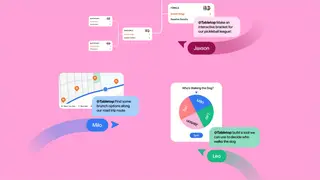
Google has launched an experimental AI tool called Tabletop that enables users to generate personalized collaborative spaces for organizing personal projects, family events, and group activities. By describing desired tools—like chore charts or trip itineraries—users can create interactive hubs using natural language prompts, similar to how Google Docs allow real-time collaboration. Access is currently limited to adults over 18 in the U.S. via a waitlist.
In November 2026, Google introduced Tabletop, an experimental AI-powered platform enabling users to generate custom collaborative spaces through natural language prompts. Designed for personal use, Tabletop allows individuals to create interactive tools like chore charts, trip itineraries, dinner polls, and expense splitters by simply describing their needs—similar to how Google Docs enables real-time collaboration. The tool is currently accessible only via a waitlist, limited to adults over 18 in the United States, though this restriction may be temporary given the tool’s potential for family planning and youth-oriented use cases. Roman Nurik, lead designer and engineer at Google Labs, emphasized that users can add links, files, and ideas before prompting Tabletop to generate a fully functional collaborative hub, which can then be shared instantly via invite link. The platform draws visual and functional inspiration from workplace tools like Asana and Monday but is tailored for informal, personal coordination.
The development of Tabletop reflects Google’s broader strategy to integrate AI into everyday productivity workflows beyond traditional office environments. While the company has previously launched AI features in Docs and Sheets, Tabletop represents a shift toward user-driven creation of bespoke collaboration tools without requiring technical expertise. The tool’s focus on personal planning—such as family events or group activities—suggests an effort to democratize app-building for non-technical users. However, the age restriction raises questions about future accessibility for younger users and potential parental oversight concerns. It remains unclear whether Google plans to expand access beyond the U.S. or eventually open Tabletop to all users, including minors, as the product matures.
Tabletop could significantly reshape how individuals organize personal and family life by lowering the barrier to creating shared digital workspaces. If widely adopted, it may reduce reliance on fragmented tools like spreadsheets, messaging apps, and static calendars, offering a more cohesive, AI-guided alternative. The platform’s success may influence other tech companies to develop similar no-code, AI-driven collaboration tools, potentially disrupting the market for personal productivity apps. A comparable precedent is the rise of Notion, which gained popularity by combining document creation with customizable databases—Tabletop could be seen as a more AI-native evolution of that concept. However, privacy and data control remain concerns, especially if users share sensitive information like financial plans or family schedules in a centralized space. The long-term impact will depend on how Google balances accessibility with safety, particularly regarding age restrictions and content moderation. Future developments to watch include expansion beyond the U.S., integration with other Google services, and potential monetization strategies.