OpenAI's Expert Committee Validates AI-Generated Proof of Quantum Yang-Mills Theory
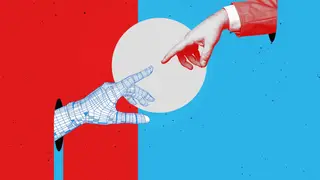
A team of experts led by physicist David Gross has formally verified an AI-generated proof of the existence of pure Yang-Mills theory, a cornerstone of the Standard Model in particle physics. The proof was confirmed using Lean, a formal verification programming language, and released after a controlled review process to prevent information overload. Some mathematicians have criticized the approach as lacking transparency despite its technical rigor.
On November 10, 2026, a committee led by Nobel laureate physicist David Gross formally verified an AI-generated proof of the existence of pure Yang-Mills theory, a foundational component of the Standard Model in particle physics. The proof, produced by OpenAI’s large language model (specifically its Astra system), was validated using Lean, a formal verification programming language, and released after a controlled review process to avoid overwhelming the scientific community—a response to the earlier “slop drop” incident in October when over 700 AI-generated proofs were released in a single day. The result addresses the first part of the Clay Mathematics Institute’s Millennium Prize Problem on Yang-Mills theory, which demands a rigorous mathematical construction of the theory and the demonstration of a mass gap. While the existence claim has been confirmed, the more complex second part—proving the mass gap—remains unsolved. The committee, composed of five experts including Gross, admitted they do not fully understand the proof’s inner workings but affirmed its formal correctness in Lean. This approach, dubbed “shepherding,” has drawn criticism from mathematicians like Scott Armstrong of NYU, who argue that peer review should be open and transparent rather than curated by a select few.
The broader context includes OpenAI’s strategic positioning ahead of rival Anthropic, which was reportedly collaborating with an independent mathematician on the same problem. The controlled release reflects a shift in how AI-generated scientific breakthroughs are managed—balancing rigor with accessibility. While the proof is now publicly available for scrutiny, its complexity means it may take months or years for the broader community to fully digest and validate. What remains unknown is whether the model’s reasoning can be replicated or generalized, or if this result is an isolated achievement. The long-term implications for how scientific discovery is conducted—especially with AI as a co-author—are still unfolding.
This milestone could reshape how foundational science is validated, raising questions about trust in AI-generated knowledge and the role of human oversight. If such proofs become routine, institutions like the Clay Mathematics Institute may need to adapt their prize frameworks to account for machine-assisted discovery. The “shepherding” model may set a precedent for controlled releases of high-stakes results, potentially slowing down open access but reducing misinformation risks. A comparable case is the 2018 controversy over an AI-generated proof in combinatorics that sparked debate about authorship and verification. Here, the impact may extend beyond physics into mathematics and computer science, where formal verification tools like Lean are gaining traction. The next phase could see researchers deploying AI agents to reverse-engineer the proof, potentially leading to new collaborative models between humans and machines. However, if transparency remains limited, it may fuel skepticism about the legitimacy of AI-driven science—especially among those who value open peer review. What’s likely is that this event will catalyze broader discussions on governance in AI-assisted research.