This Unprecedented El Niño Could Push Global Temperatures Past 1.5°C Permanently
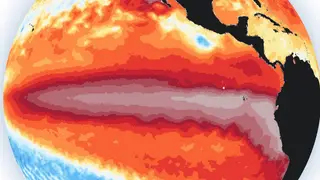
The current El Niño event, potentially the strongest in over a millennium, is driving global temperatures to exceed the 1.5°C threshold above preindustrial levels—possibly permanently. Scientists warn that this year may mark the first time global averages do not dip below 1.5°C even after the event ends. The phenomenon occurs when weakened trade winds allow warm Pacific Ocean water to shift eastward, releasing vast heat into the atmosphere and amplifying global warming trends.
The current El Niño event, potentially the strongest in over a millennium, has already driven global sea surface temperatures in the Pacific’s core to 3.4°C above normal by November 2026—surpassing records set during the 2015 event and approaching an estimated peak of 4°C above average. This unprecedented heat pulse is projected to push global average temperatures to 1.52°C above preindustrial levels in 2026 and possibly as high as 1.74°C in 2027, making these the third and fourth consecutive years to exceed the 1.5°C threshold established by the Paris Agreement. The phenomenon is accelerating faster than any prior El Niño, with peak conditions expected earlier than usual—typically November or December—highlighting its abnormal intensity. Scientists including Daniel Swain of University of California Agriculture and Natural Resources and Zeke Hausfather of Berkeley Earth and Stripe emphasize that this event may mark the first time global temperatures fail to dip below 1.5°C even after El Niño subsides, suggesting a potential permanent shift in climate baselines. The underlying cause is weakened trade winds allowing warm Pacific waters to shift eastward, releasing vast heat into the atmosphere. This natural cycle is now amplified by long-term climate change, raising concerns about irreversible feedback loops such as accelerated sea ice melt, permafrost thawing, and increased wildfire emissions.
The background for this event lies in decades of rising greenhouse gas concentrations, which have already warmed ocean basins and altered atmospheric dynamics. Prior El Niño events, like the 1877 episode linked to widespread famine, were extreme but not superimposed on such a warm baseline. The current crisis is compounded by the fact that climate models now suggest even a temporary spike could trigger lasting warming mechanisms. Key institutions involved include Copernicus Climate Change Service, which monitors global data; Berkeley Earth and Stripe, which contribute modeling and analysis; and the international scientific community, which is urging policymakers to recognize the implications for long-term climate targets. What remains unresolved is whether this year’s temperature surge will be followed by a return below 1.5°C or if the threshold has been permanently breached. The answer hinges on whether feedback mechanisms—such as methane release from thawing permafrost or carbon emissions from wildfires—will persist beyond the El Niño cycle.
The potential permanent breach of the 1.5°C threshold could have profound societal impacts, particularly for vulnerable populations in low-lying coastal regions and arid zones already experiencing intensified droughts and extreme heat. Insurance markets may face increased volatility as climate-related disasters become more frequent and severe, while agricultural sectors could see sustained disruptions due to shifting rainfall patterns and higher temperatures. Energy demand for cooling is expected to rise, straining infrastructure and increasing emissions unless renewable transitions accelerate. Governments may be pressured to revise national climate commitments, though political will remains uncertain. A comparable precedent is the 2015–2016 El Niño, which caused widespread droughts and crop failures globally, but this year’s event occurs against a much warmer baseline, amplifying its effects. The real concern now is not just the immediate heat spike but whether such events will increasingly undermine global climate goals. What to watch for next includes whether 2027 becomes the hottest year on record, how quickly temperatures decline post-El Niño, and whether new emissions feedbacks—such as from wildfires or permafrost thaw—are detected in atmospheric data. These indicators could shape future climate policy and public perception of warming’s irreversibility.