Google Arts & Culture Launches AI-Powered Retrospective Honoring South African Artist Dr. Esther Mahlangu
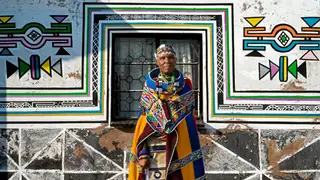
Google Arts & Culture has unveiled an online retrospective dedicated to Dr. Esther Mahlangu, marking her 91st birthday with over 45 curated stories and AI-recreated memories from her early life. The project uses artificial intelligence to reconstruct undocumented childhood experiences based on her personal narratives, preserving Ndebele cultural heritage. It includes rare archival materials, virtual tours, and murals accessible globally.
Google Arts & Culture launched an AI-powered online retrospective on November 11, 2026, to honor South African artist Dr. Esther Mahlangu on her 91st birthday. The project features over 45 curated stories, rare archival materials, virtual tours, and AI-generated reconstructions of her early life before 1980—years for which no visual records existed. Using interviews and personal narratives from Mahlangu herself, the team at Google Arts & Culture, in collaboration with Google DeepMind and the research studio Domestic Data Streamers, applied the synthetic memories initiative to generate still images and videos based on her recollections, such as her first painting at age 10 using feathers. These AI recreations were developed through a series of workshops and interviews, guided by historical accuracy and cultural respect. The retrospective was co-curated by Dr. Nontobeko Ntombela, senior lecturer at the University of the Witwatersrand, who has long studied South African women artists and sought to preserve Mahlangu’s legacy amid gaps in archival documentation. Key institutions involved include Art of Contemporary Africa, Iziko Museums, the British Museum, the National Museum of Women in the Arts, and Serpentine, all contributing materials and expertise.
The project marks a significant intersection of cultural preservation, artificial intelligence, and digital archiving. While Mahlangu’s public career began in the 1980s, her formative years were undocumented—making this AI reconstruction a pioneering effort to fill historical gaps without fabrication. The team emphasized that the process was rooted in personal memory and ethical design, not speculative storytelling. What remains unresolved is how audiences will perceive the authenticity of AI-generated memories in cultural contexts, especially when they are presented as factual reconstructions. Future developments may include expanded use of similar methods for other under-documented artists or communities, though questions about long-term archival integrity and consent remain open.
This project could reshape how digital platforms approach the preservation of intangible cultural heritage, particularly for marginalized or historically underrepresented artists. By using AI to reconstruct missing personal histories, Google Arts & Culture may set a precedent for other institutions seeking to bridge archival gaps—especially in postcolonial contexts where documentation has been uneven. The involvement of academic curators like Dr. Ntombela and international museums suggests a growing trend toward collaborative, tech-enabled curation that blends scholarly rigor with public accessibility. Comparable efforts include the use of 3D scanning for endangered heritage sites or AI-assisted restoration of damaged artworks, but this case stands out for its focus on lived memory rather than physical artifacts. The broader impact may extend to how audiences engage with cultural narratives—potentially increasing empathy and global understanding of Ndebele traditions and African modernism. However, it also raises concerns about the ethics of AI-generated content: who controls the narrative, and how do we distinguish between memory and simulation? The project may inspire similar initiatives in other regions, but whether such tools will be adopted responsibly—without reinforcing stereotypes or misrepresenting history—remains to be seen. What to watch for is how institutions balance innovation with transparency, especially as generative AI becomes more embedded in cultural storytelling.